


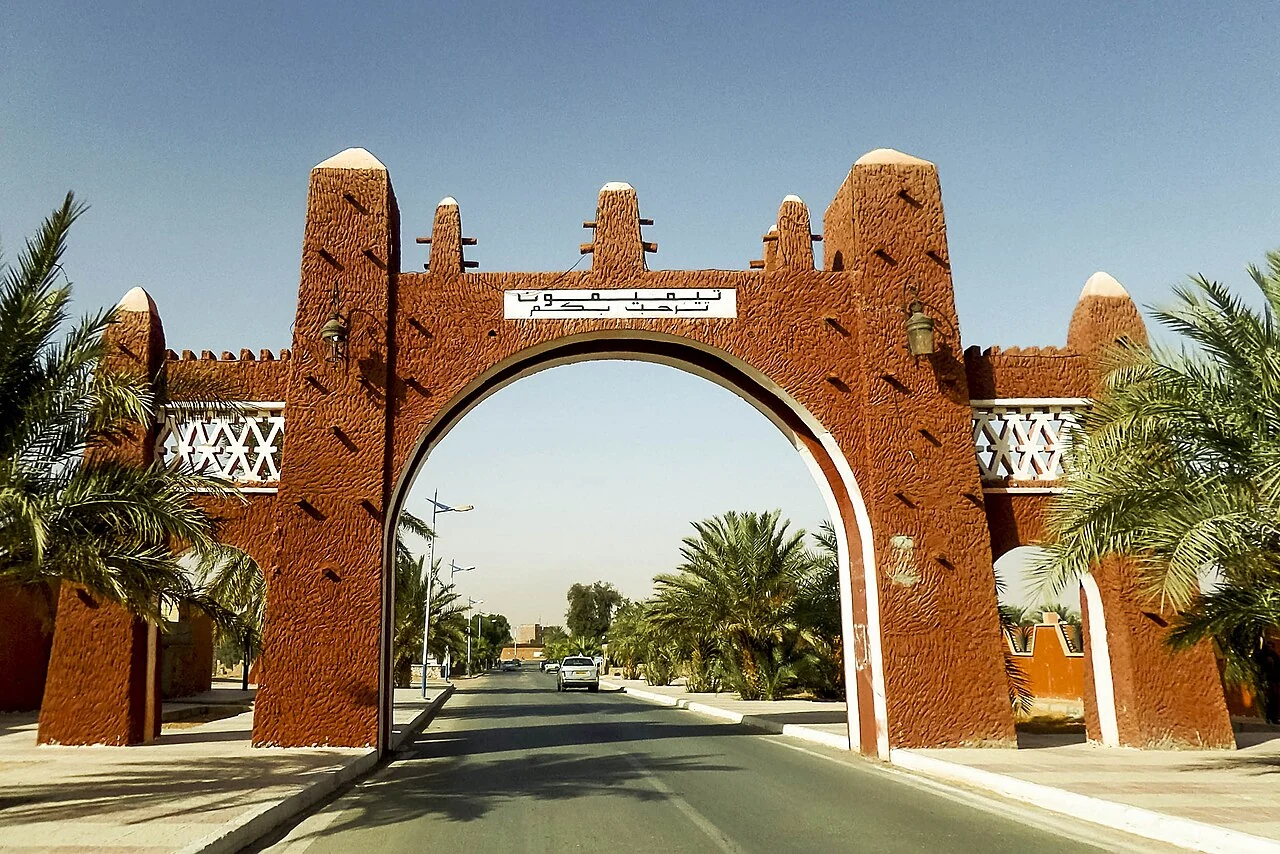
Timimoun is a compelling place to slow the tempo of a Sahara trip. Its red-ochre townscape offers an immediate visual identity, but the richer story emerges through the surrounding oasis routes, cultivated places and community traditions of Gourara. Plan for changes of scale: streets and building details, an outlook over the wider landscape, then a locally arranged visit where someone can explain how a garden or settlement works.
Think of Gourara as a region, not a backdrop
Timimoun is a principal oasis of Gourara, between the Grand Erg Occidental to the north and the Tademaït plateau to the south. It is a starting point for exploring the region rather than a substitute for it. The tourism directorate publishes several circuits through surrounding settlements, illustrating the variety beyond a single town walk. Those lists help frame possibilities, but do not establish which gardens, buildings or religious places welcome visitors during your trip.
Begin with the question that interests you most: architecture, oasis cultivation, the wider landscape or community arts. Ask the guide to connect that interest with a small number of appropriate places. A visit shaped around one clear theme can reveal more than a loop designed simply to collect as many settlement names as possible.
Look carefully at the red town
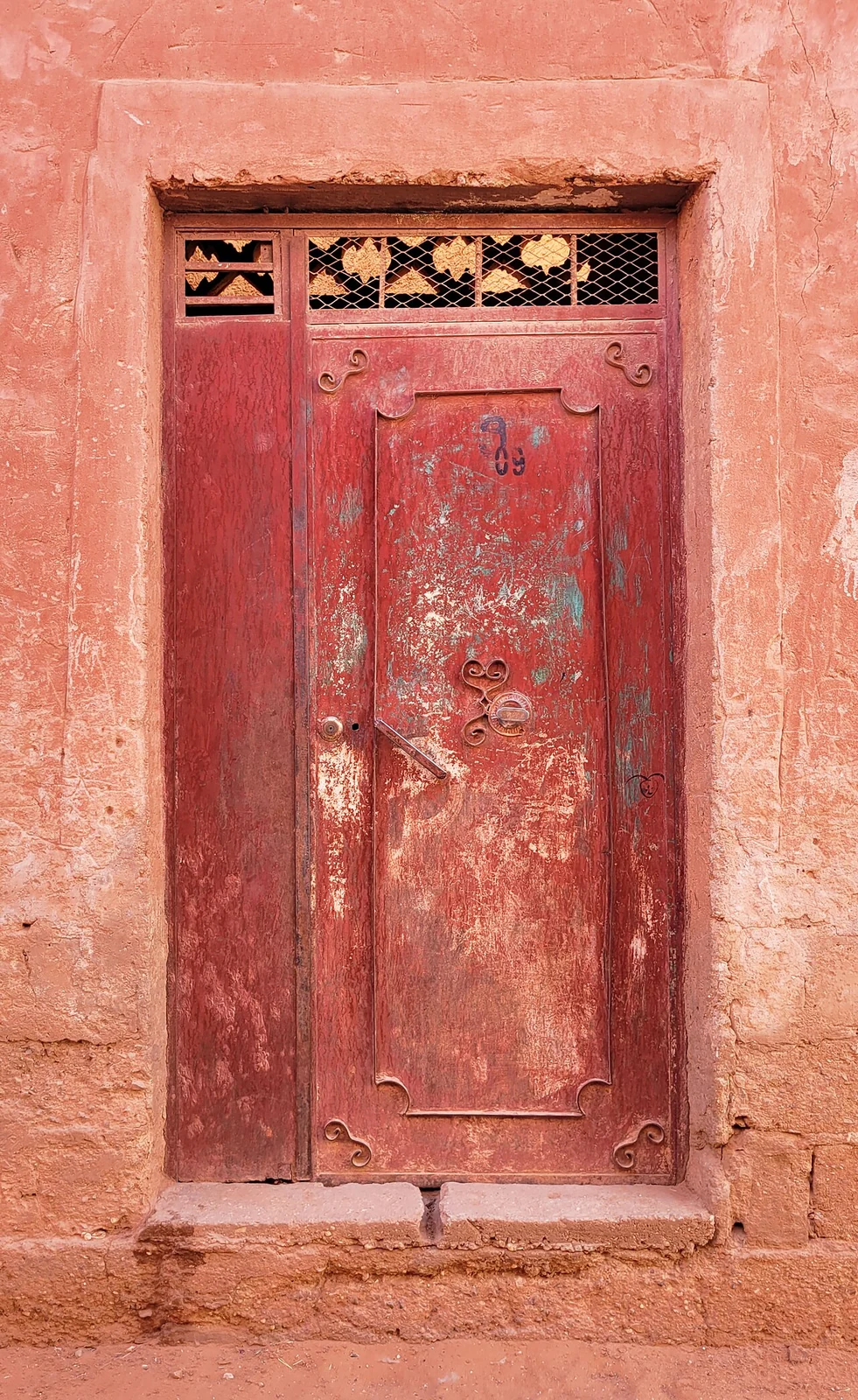
Timimoun’s red-ochre buildings create a strong visual impression, but colour alone is a thin account of architecture. On a town walk, notice changes in scale between a public frontage, a narrow passage and an inhabited doorway. Ask which materials and construction methods belong to the particular building in front of you; similar colours do not prove a shared age or technique.
Make time to observe how the town functions rather than searching only for an empty frame. Shops, repairs, deliveries and conversations are part of the place. A knowledgeable guide can help separate older fabric, later additions and contemporary adaptations without implying that modern life is a blemish on an otherwise authentic view.
Use the sebkha to understand the wider setting
The local tourism circuits include Timimoun’s sebkha setting, offering another way to connect the town with its surrounding landscape. Ask a guide to explain the basin and to choose a viewpoint that places settlement, cultivated ground and the open setting in relation to one another. The aim is to understand where the oasis sits, rather than make one expected colour or reflection the measure of a successful visit.
For an unhurried outing, combine that outlook with a town or oasis visit instead of treating it as an isolated photo stop. The guide should choose the route and stopping place for current ground conditions. What looks like a convenient shortcut across an open surface is not necessarily a suitable walking or driving line.
Choose a few settlements and ask better questions
Ighzer, Aghlad and Ouled Said appear among the directorate’s route suggestions, while other circuits extend towards places such as Aougrout. Use these names as the beginning of a discussion with a local guide. Ask what distinguishes the proposed stops, who will introduce them and how much time remains for walking once the driving is accounted for.
At an authorised visit, let the physical arrangement guide your curiosity. How does a path connect homes and gardens? Where is a public space clearly different from a private one? Which features still have a working role? You do not need unrestricted entry to understand a settlement, and a considered view from a public route can be more appropriate than entering every courtyard.
Understand foggaras without confusing heritage labels
Water is an essential theme for understanding oasis life, but heritage terminology needs precision. UNESCO’s inscription on foggara water measurers concerns the knowledge and skills of communities in Touat and Tidikelt. It is not a blanket UNESCO designation for Timimoun, Gourara or every water channel encountered on a visit. A foggara discussion here should retain that geographical distinction.
Ask your guide whether a local water-related visit is possible and who can explain the actual system. Questions about allocating shares, maintaining channels and agreeing responsibilities are as interesting as the visible structure. In UNESCO’s account, measurement is both intellectual and manual work; a distribution feature makes fuller sense when someone explains the decisions and obligations behind it.
Hear Ahellil in its community context
Ahellil is a poetic and musical tradition associated with the Zenete communities of Gourara. UNESCO describes a form that brings together poetry, polyphonic singing, music and dance, with a singer, flute and surrounding chorus. Its connections to celebrations, social cohesion and oasis agriculture make it more than entertainment added to the end of a sightseeing day.
If listening is a priority, ask whether there is an appropriate public or explicitly hosted opportunity during your visit. An event’s religious or family significance may matter more than a visitor’s schedule. Agree about recording and payment, and accept that participation can be limited. Do not assume that any desert music offered elsewhere is Ahellil, or that a performance is always available.
Make food and craft part of a conversation
A market stop is most useful when it moves beyond browsing. Ask which goods come from nearby settlements, which arrive from elsewhere and what is available only at particular times. If a maker is receiving visitors, discuss the work’s materials and use before asking for a demonstration. An ordinary practical object can tell you as much as an item labelled traditional.
At meals, leave room for your hosts’ actual repertoire rather than demanding a supposedly definitive Saharan menu. Ask what has been prepared, where ingredients come from and whether your dietary needs can be accommodated. Hospitality should not require anyone to disclose a private recipe, open a home or turn a family occasion into part of your itinerary.
Alternate town time and outward journeys
An editorial approach is to begin with Timimoun itself, follow with a selective oasis circuit, and keep another part of the stay flexible for a deeper interest. That might mean a longer conversation about water, a second architectural walk or an invited cultural encounter. The sequence is a planning idea, not a timetable or a claim about current tour availability.
Avoid using every late afternoon for another transfer. Returning to the same public viewpoint or street with a better understanding of its setting can be surprisingly rewarding. Ask the operator to identify which visits require advance agreement, so your free time remains genuinely flexible rather than concealing unconfirmed arrangements.
Arrange a comfortable, respectful pace
Specify how much walking, uneven ground and time in a vehicle suit your party. Ask about shade, seated breaks, toilets and the distance from the vehicle at each proposed stop rather than accepting a general claim that an oasis visit is easy. Plan clothing and drinking water for the actual forecast, with an alternative to exposed excursions when conditions are unsuitable.
Confirm current transport and access locally, and consult official advice for the full journey. Keep garden visits permission-based and stay clear of working channels, shafts and fragile edges. The best visit to Gourara leaves you with a clearer understanding of how people maintain their surroundings, not a longer list of places you entered.

