


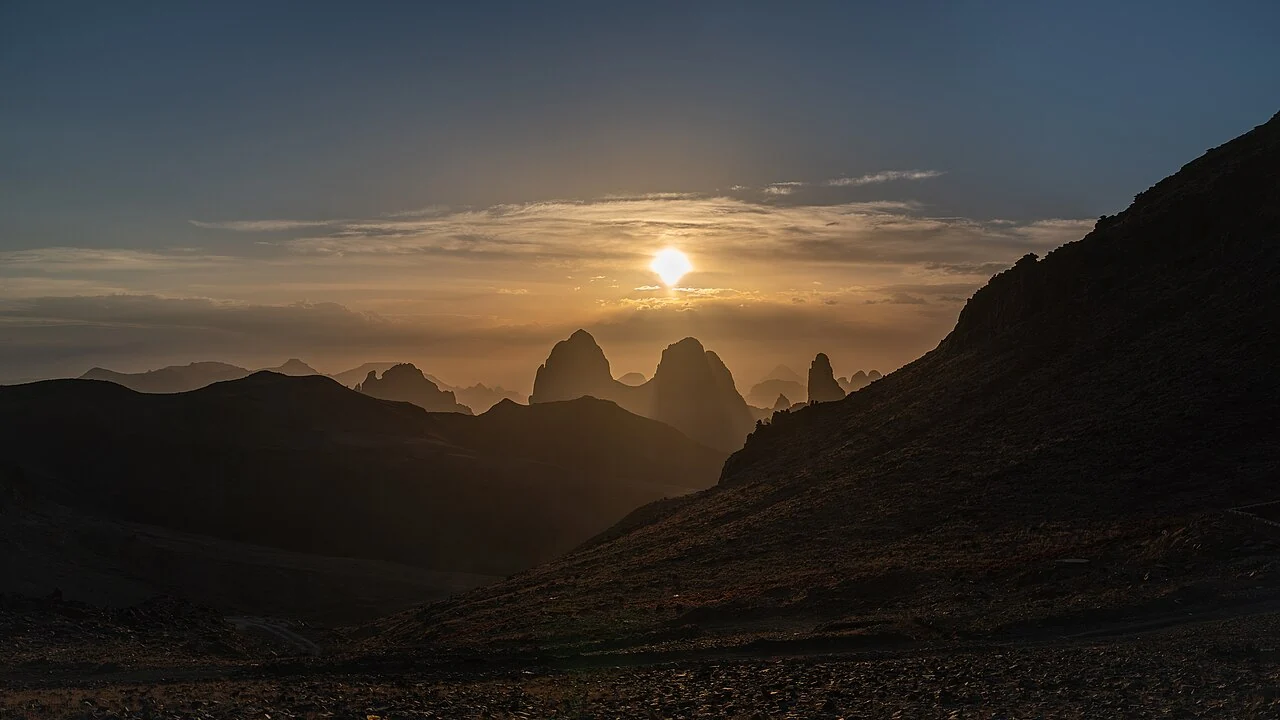
Think of the Ahaggar first as mountain country. Its rock forms, broad spaces and changing viewpoints offer a very different experience from an oasis-and-dunes itinerary. Tamanrasset is the starting point for understanding that difference, not just a name on an arrival ticket. A rewarding journey links the inhabited town, the knowledge of local guides and carefully chosen excursions, with Assekrem treated as a possibility to plan properly rather than a summit photograph to collect at any cost.
Separate the region, the mountain core and the viewpoint
Ahaggar names the wider mountain region. Atakor is central to the high-mountain scenery described by the Tamanrasset tourism directorate, while Assekrem is a particular destination associated with expansive views across it. These are related names, but they are not interchangeable descriptions of a single stop outside town.
Ask an operator to place every proposed overnight and walk within that geography. A trip called an Ahaggar circuit might emphasise very different landscapes from one centred on Atakor. Understanding the sequence helps you decide whether the journey offers the sustained mountain experience you want or mainly long transfers between widely separated highlights.
Use Tamanrasset as more than a transit point
Town time is where a mountain journey can become more personal and better organised. The regional tourism directorate identifies ksar Ag Amstan in Tamanrasset among the Ahaggar’s built heritage, describing an architectural tradition using local materials. Ask whether an appropriate exterior visit can fit alongside an introduction to the contemporary city. This places buildings and present-day streets beside the mountain scenery, rather than leaving the region’s human history confined to a campfire conversation.
This is also the moment to settle equipment and communication details face to face. Check the vehicle seating, try the sleeping equipment if possible and talk through any dietary needs. A relaxed start gives both you and the team an opportunity to adjust the itinerary before leaving the services available in town.
Read Atakor through its changing forms
The regional tourism account places volcanic scenery at the centre of the Ahaggar experience and names mountain forms including Ilmane and Tahat. You do not need to climb a major summit to appreciate this country. The relationship between a prominent peak, an open foreground and surrounding ridges can be more revealing than a hurried effort to reach the highest possible point.
Ask for stops that contrast a broad panorama with a closer walk over suitable ground. Let the guide explain the forms you can actually identify rather than attach a geological certainty to every striking rock. If photography matters, discuss it early: time for observation and changing light should be built into the route, not negotiated at every stop.
Plan Assekrem as an experience, not a promise
Assekrem is known for its views over the Atakor landscape and for the hermitage associated with Charles de Foucauld. Those two interests can sit together without allowing the story of a European religious figure to eclipse the region’s own communities and history. Ask what the visit will include and whether any interior or religious space is actually open to visitors.
An early or late viewpoint visit changes the practical requirements. Clarify the walking surface, the amount of ascent, the return in fading light and the overnight location. Warmth, wind protection and the ability to turn back matter more than matching an idealised sunrise image. Neither clear weather nor access should be treated as part of a guaranteed package.
Meet people without expecting a performance
Tuareg communities are central to the cultural context of the Ahaggar, but no single encounter can stand for every person or way of life. A guide, driver or artisan is also someone with present-day expertise, work and ambitions. Invite explanations of the landscape and of everyday choices, rather than asking people only to illustrate a romantic desert identity.
An arranged craft visit works best when it gives a maker control over what is shown. Ask about materials, use, repair and authorship; compare the workmanship rather than buying solely on a claimed age or symbolic story. Agree separately about portraits or recordings. Paying fairly for time and skill is more meaningful than expecting unrestricted access in the name of hospitality.
Balance viewpoints with the journey between them
For an editorial itinerary framework, combine a Tamanrasset introduction with one coherent mountain circuit and time to recover before departure. Make Assekrem a focus only if current conditions and your preferences support it. Ask whether adding a further site improves the route or simply increases time in the vehicle; a shorter list can leave more space for the country itself.
Have the operator distinguish vehicle stages from walks and explain the intended breaks. A map line says little about the effort of travelling over uneven ground. If anyone in your party finds rough driving tiring or painful, discuss that directly and ask for a realistic alternative rather than assuming a private vehicle solves every comfort issue.
Choose how close to the elements you want to be
Mountain travel makes the overnight arrangement a significant part of the experience. Some travellers want a camp and a quiet evening outside; others want the reassurance of a confirmed room and a defined bathroom arrangement. Neither preference is less adventurous. What matters is that the proposal names what is available on your route rather than describing every night simply as accommodation.
Ask about shelter from wind, sleeping insulation, cooking arrangements and the provision of drinking and washing water. Find out who is responsible for waste and where it will be taken. If the team suggests a change of overnight location, the decision should reflect terrain and conditions, not pressure to preserve an attractive but unsuitable plan.
Prepare for remoteness and elevation together
Do not judge the mountain conditions from the weather in Tamanrasset alone. Discuss the expected temperatures, exposure and walking effort at each overnight and viewpoint. Bring adjustable layers and suitable footwear, and explain any health concern that could affect a higher or more remote excursion. Individual suitability needs more detail than a general fitness label.
Confirm current route permissions and local guiding arrangements, then compare the complete plan with official travel advice and insurance coverage. Ask how the team communicates where mobile service is unavailable, who receives its itinerary and what would trigger a return. A guide’s knowledge is essential, but it does not remove weather, transport or security risks.
Leave room for evidence beyond the panorama
The Ahaggar’s regional heritage account includes engravings and other archaeological traces alongside its mountain scenery. If heritage interests you, ask for an appropriately guided visit to a currently permitted site rather than treating rock art as an incidental roadside discovery. Look without touching or collecting, and distinguish the guide’s interpretation from what can be confidently established from the image.
Above all, leave uncommitted time within the day. A pause to compare distant forms or hear a local place name explained can give a journey depth that an extra destination cannot. The Ahaggar becomes more memorable when it is allowed to be a complex inhabited mountain landscape, not merely the background to one celebrated viewpoint.
