


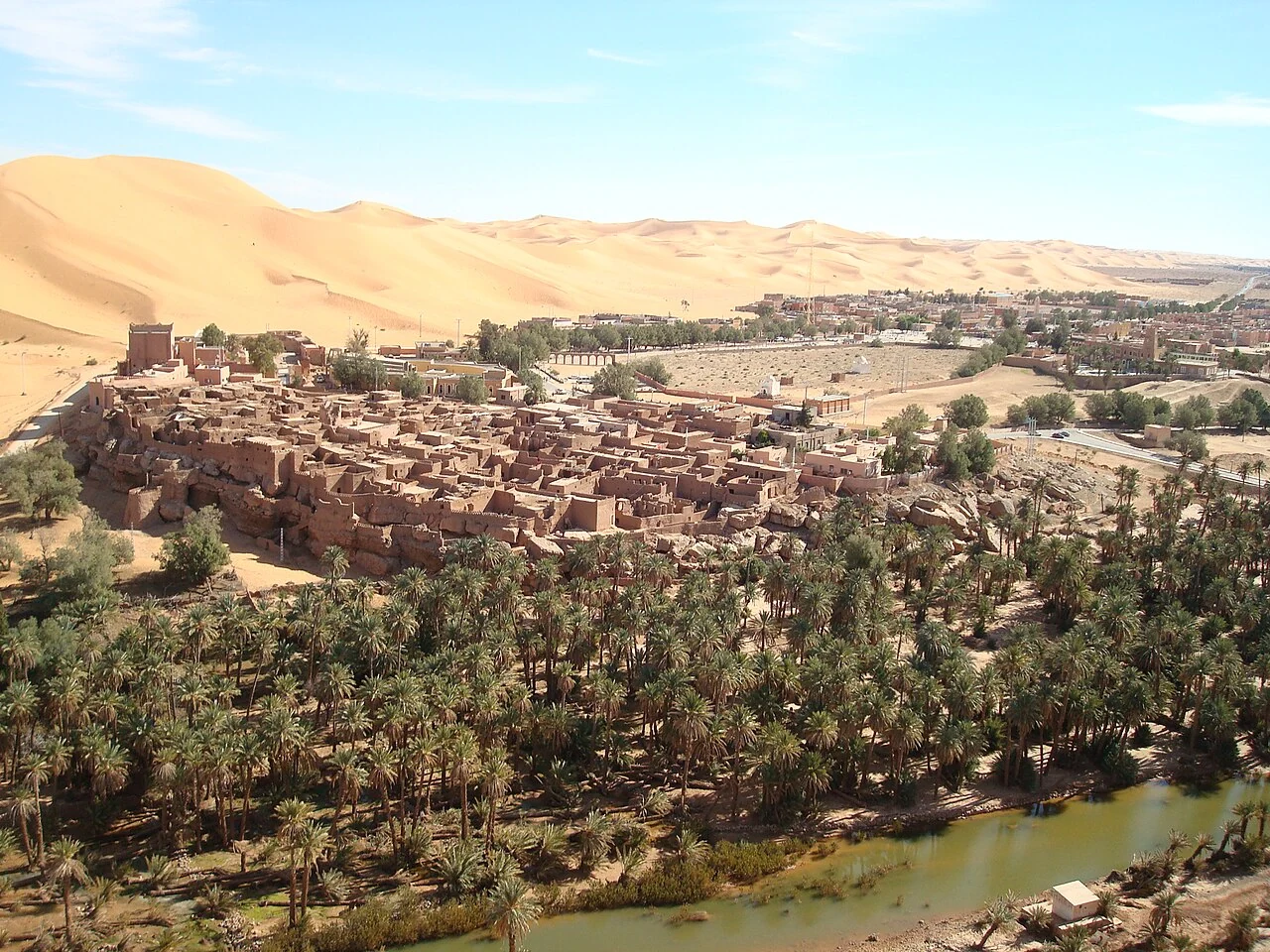
The appeal of Saoura is not simply that sand meets an oasis. It is the close relationship between cultivated land, settlements and very different desert surfaces. Taghit and Beni Abbes bring that relationship into focus, but they should not be treated as interchangeable stops on a single scenic road. Choose time in each according to what you want to understand: the dune edge, the workings of a palm grove or the life and form of an older settlement.
Keep the two oasis settings distinct
Taghit lies beside the dunes of the Grand Erg Occidental in the Zousfana setting. Beni Abbes is associated with the valley and intermittent channel of the Oued Saoura. The Béchar tourism directorate presents the wider Saoura region through its oases, old settlements and dunes; for an actual journey, those broad regional connections still need to become a confirmed transport plan.
Begin by asking where you will arrive and sleep, and how the transfer between your chosen bases will work. Do not assume that two places appearing in the same regional guide can be comfortably explored from one hotel. Geography should help you reduce unnecessary backtracking, not tempt you to squeeze everything into the shortest possible stay.
Let Taghit explain the dune edge
At Taghit, the proximity of the ksar, the oasis and the Grand Erg Occidental gives a useful first lesson in desert scale. The sand is not an isolated playground: it belongs to a setting of settlement and cultivation along the Zousfana valley. An introduction that places the built forms and palm-growing landscape beside the dunes is more satisfying than heading immediately for the most prominent crest.
Arrange a walk suited to the conditions and your ability, with an agreed turnaround point. Walking in yielding sand can take more effort than its gentle profile suggests. Ask your guide to choose an appropriate place away from cultivated plots and fragile margins, and make time to look back towards the oasis as well as out over the sand.
Read Beni Abbes from valley to settlement
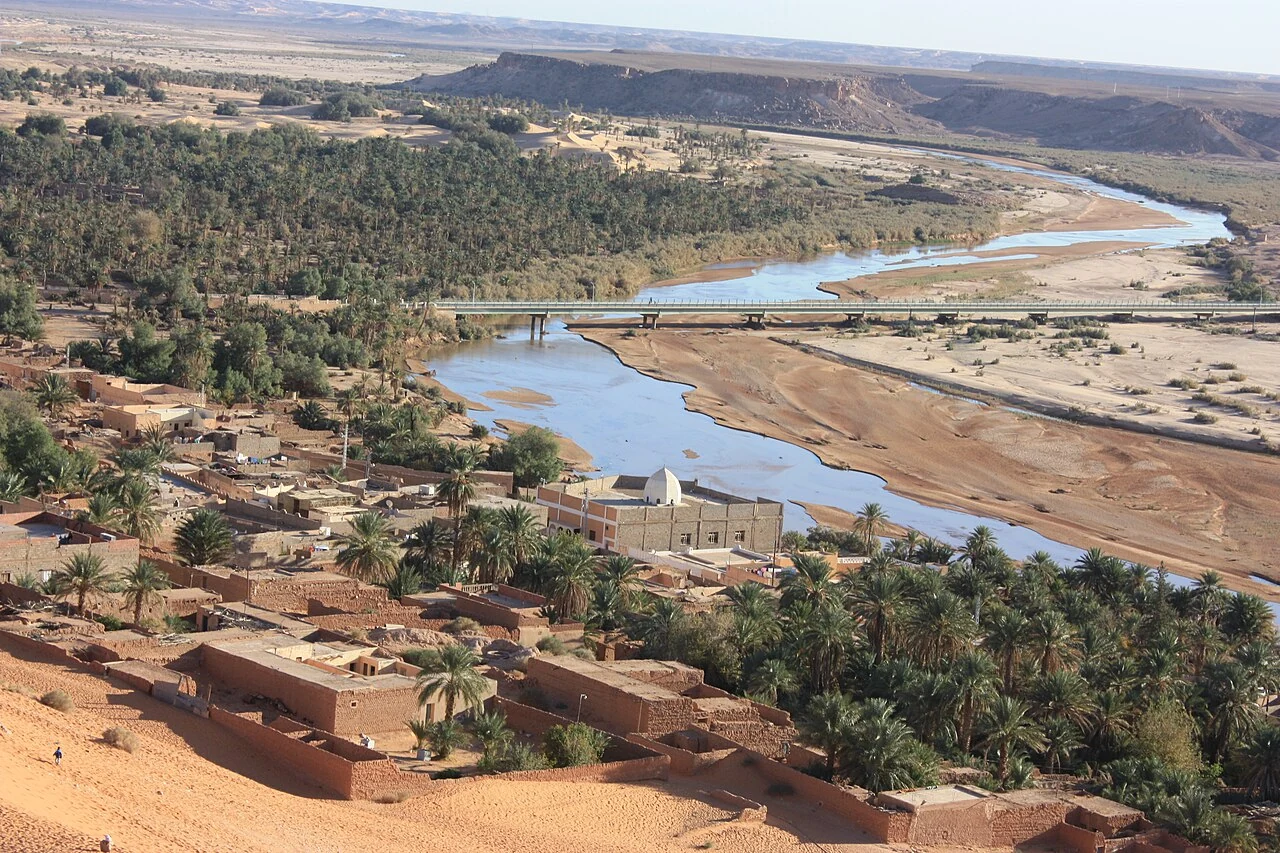
Beni Abbes offers a different organising feature: the Saoura valley and its wadi. A palm-grove ksar is part of the town’s heritage setting, linking built space with cultivation rather than separating an old quarter from its surroundings. Start with a viewpoint or guided explanation that makes that relationship clear before concentrating on individual walls or doorways.
Ask which parts of the old settlement can currently be visited and whether restoration or local use affects the route. A ruin, an inhabited place and a restored heritage building require different ways of looking. Avoid accepting a picturesque appearance as proof that a structure is empty, stable or open for exploration.
Look at a ksar as a piece of social organisation
A ksar is a fortified settlement; ksour is the plural. The term describes more than an attractive cluster of earth-coloured buildings. On a guided visit, ask how movement, gathering and privacy are organised. A passage that seems incidental in a photograph may be important to understanding how the settlement worked and how it relates to the land around it.
Observe where the guide pauses and where walking through is more appropriate. Ask which building materials can actually be identified and what repairs are being made. There is no need to invent a grand historical story for every doorway: the practical questions of maintenance, ownership and present use often reveal more about a place’s future.
Treat a palm grove as a working landscape
The green of an oasis can look restful from a distance, but a cultivated plot represents decisions and labour. If a grower is willing to host a visit, ask how water reaches the particular plot, how access is shared and which tasks are important at that point in the year. Do not assume that every Algerian oasis uses the same system.
Stay on agreed paths and let the host decide whether any produce may be handled or tasted. A quieter visit might include explanations of tools, pruning or the use of shade, but the content should follow actual work rather than a performance requested for photographs. Buying something directly, when offered, can complement fair payment for a hosted visit.
Notice what is not sand
Around Beni Abbes, the useful landscape vocabulary includes erg, hamada and wadi: dune country, rocky desert surfaces and a watercourse that may not be flowing when you see it. These are not just alternative scenic backgrounds. Their different forms help explain why routes, settlement and vegetation are distributed unevenly rather than spread across an undifferentiated desert.
Ask for a landscape stop that brings contrasting surfaces into view. Looking from one to another can be more instructive than driving farther into a single terrain. Do not enter a channel because it appears dry or use an exposed basin as an improvised camp; current weather and local knowledge matter, including conditions beyond the immediate view.
Build the journey around stays, not transfers
An editorial framework is to give your first base time for an orientation walk and an oasis or dune excursion before moving to the second. At the next base, choose a different emphasis rather than repeat the same outing with another backdrop. A landscape-focused Taghit visit can pair well with a closer look at Beni Abbes’s valley and settlement relationships.
Ask the organiser to show where meals, rest and arrival formalities fit around the transfer. Keep room for a delayed departure or a change of plan without losing every visit at the next stop. If the available time cannot support both places comfortably, a deeper stay in one is a good choice, not an incomplete version of the region.
Find the human detail between excursions
Make part of a town visit about current work and everyday exchange. A shopkeeper’s explanation of where a product comes from or a maker’s account of how an object is repaired can offer more insight than an unsourced claim that everything is ancient. Ask before photographing people, and do not let a long lens replace a conversation about consent.
If music, a celebration or a hosted meal is proposed, establish what kind of occasion it is. An invitation to attend does not automatically include permission to record or publish. Let hosts set the terms, and avoid treating a cultural event as a guaranteed nightly service. The value lies in an appropriate encounter, not in securing a performance regardless of context.
Match the outing to real conditions
Discuss season, forecast and daily timing with the organiser, but do not read cooler weather as a blanket assurance of safety. Ask about shade, drinking water, toilets, walking surfaces and the option to shorten an outing. For anyone who finds sand or uneven lanes difficult, request a specific alternative viewpoint or activity rather than a generic accessible label.
Check official travel advice, insurance and current local arrangements for the complete road journey. Agree on pickups and return transport before an excursion, and keep the group’s expectations realistic about communications beyond town. The best Saoura itinerary leaves enough practical margin for you to enjoy the distinctions between its oases instead of experiencing them mainly through a vehicle window.

