


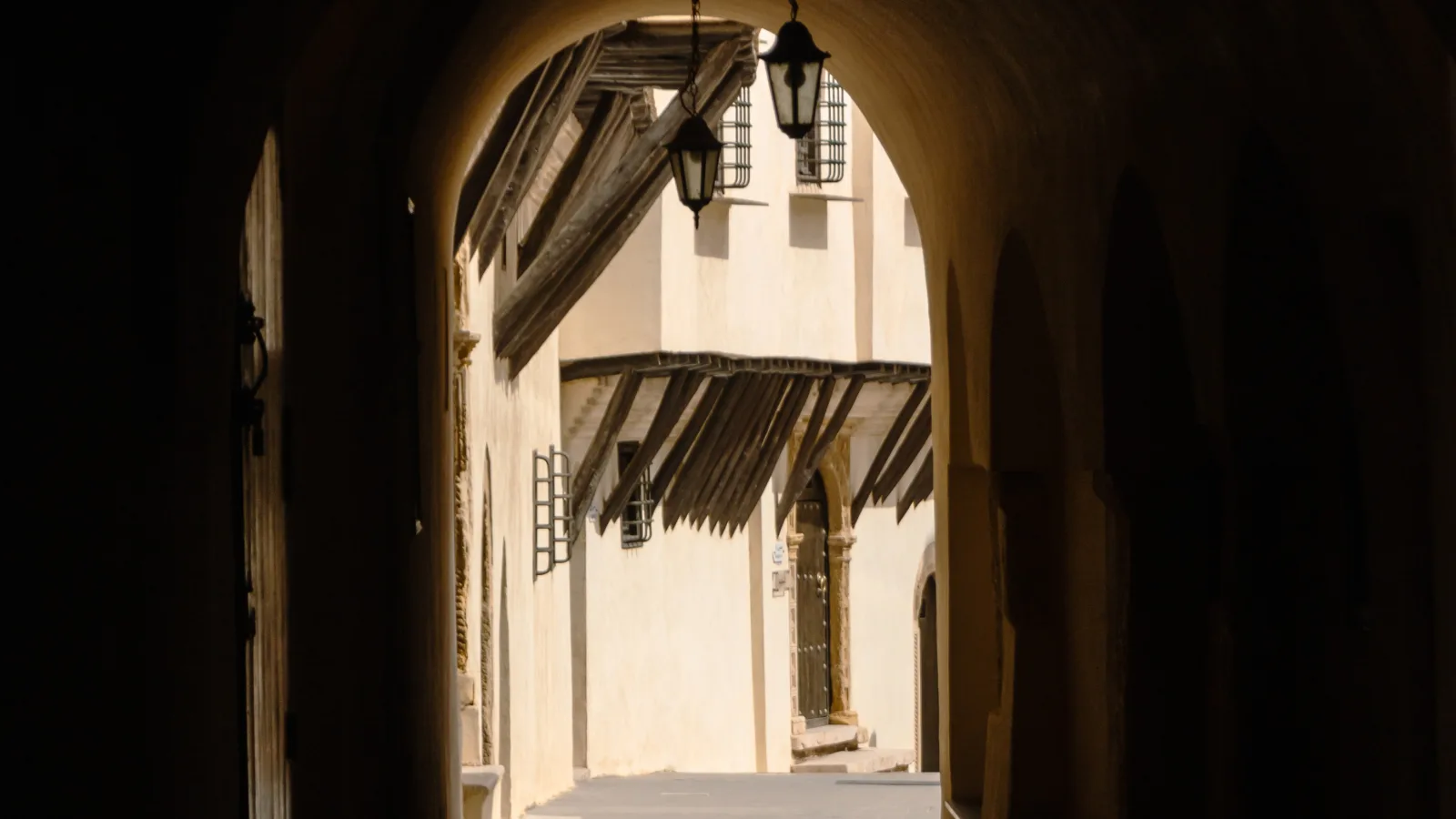
The Palais des Raïs is an especially useful place to understand how old Algiers once met the sea. Known as Bastion 23, it brings palaces, sailors’ houses and defensive spaces into one historic ensemble. Unlike a walk through the Casbah’s residential lanes, this is a managed cultural-site visit.
Algiers · Visitor guide
What makes it worth visiting
- Palaces 17, 18 and 23 in one historic ensemble
- Courtyards, covered passages and decorated interiors
- The Casbah’s historic relationship with the sea
More than one palace
The site brings together three palaces, numbered 17, 18 and 23, as well as sailors’ houses, covered passages and a coastal battery. Its operator describes it as a surviving witness to the Casbah’s former extension towards the shore.
Palace 18 is dated by the operator to 1750, with the neighbouring palaces developing around 1800. The buildings therefore should not be reduced to one construction date or one owner’s house. Their restored spaces now host cultural activity alongside the architectural visit.
Move slowly through the ensemble
Look for the changing relationship between enclosed courtyards, arcades, covered sabat passages and the open seaward setting. Decorative ceilings, wall tiles and architectural details deserve more than a quick pass between photo spots.
- Compare the scale and atmosphere of domestic and defensive spaces.
- Look up at ceilings as well as across courtyards.
- Ask which rooms, terraces or exhibitions are open that day; their availability can differ.
Find the seafront address
Use the full address on boulevard Amara Mohamed Rachid or search for Palais des Raïs / Bastion 23. Place des Martyrs is a useful public-transport reference for the lower town, followed by an onward walk towards the seafront using proper road crossings.
The map identifies the complex, not a guaranteed accessible entrance. Historic thresholds, stairs and upper levels can affect the route; ask the venue which parts are suitable if you need to avoid steps.
Official hours and admission
The operator’s visitor page, checked on 2 October 2026, lists 09:00–18:00 from Monday to Saturday and closure on Sunday. It gives a full-price ticket of 200 DZD and a 50% student reduction. Confirm the current conditions and what student identification is accepted before travelling.
Special events, holidays or conservation work may change access. Allow 60–90 minutes for a relaxed visit, with more time for an exhibition that interests you. The current programme should be checked rather than assumed from older event announcements.
Enjoy the interiors without damaging them
Follow photography instructions and avoid touching delicate finishes or leaning equipment against decoration. Comfortable shoes help with thresholds and changes of level; leave time to stop and look instead of rushing through with a large group.
- Keep children close around stairs and restricted edges.
- Ask about access to upper rooms or terraces before buying a ticket if those are essential to your visit.
- Check the Sunday closure when planning the whole day, not only on arrival.
Link the sea to the lower Casbah
Ketchaoua and the lower Casbah make a geographically sensible companion outing. Allow each its own pace and access rules: the mosque is a place of worship, the streets are residential and Bastion 23 is a managed cultural venue. A guide can help connect their histories without promising entry everywhere.
Build your itinerary
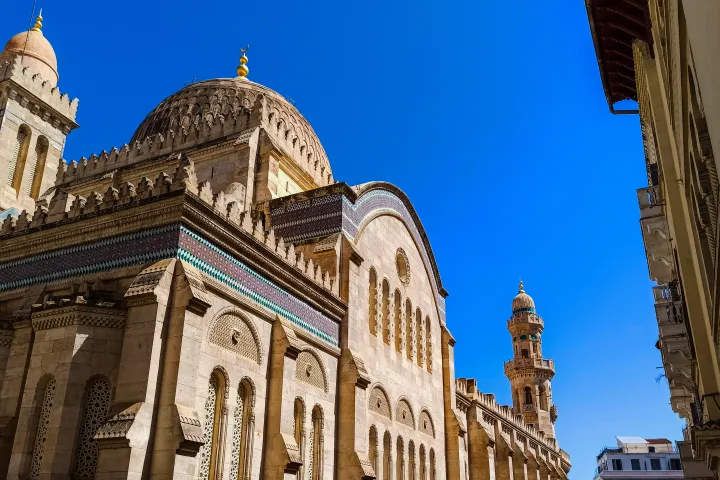
Ketchaoua Mosque: a respectful visit to the lower Casbah
Locate Ketchaoua Mosque by the lower Casbah, understand its history and plan a respectful exterior or permitted interior visit in Algiers.
Read the guide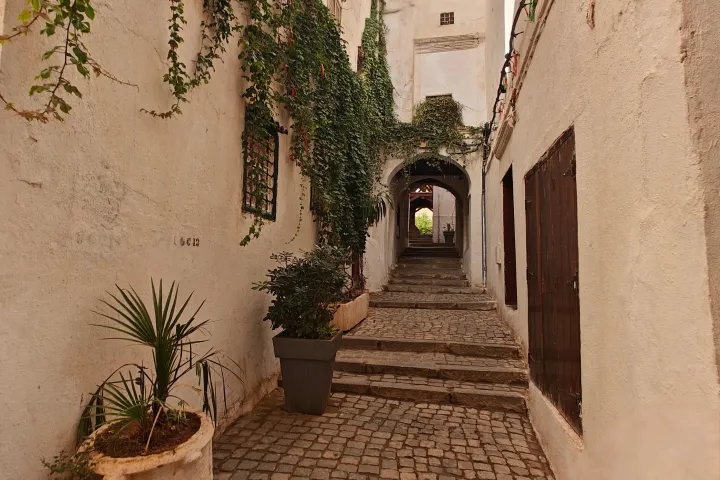
The Casbah of Algiers: a practical guide to the old town
Explore Algiers’ UNESCO-listed Casbah with advice on local guides, steep lanes, respectful photography, meeting points and nearby monuments.
Read the guide