


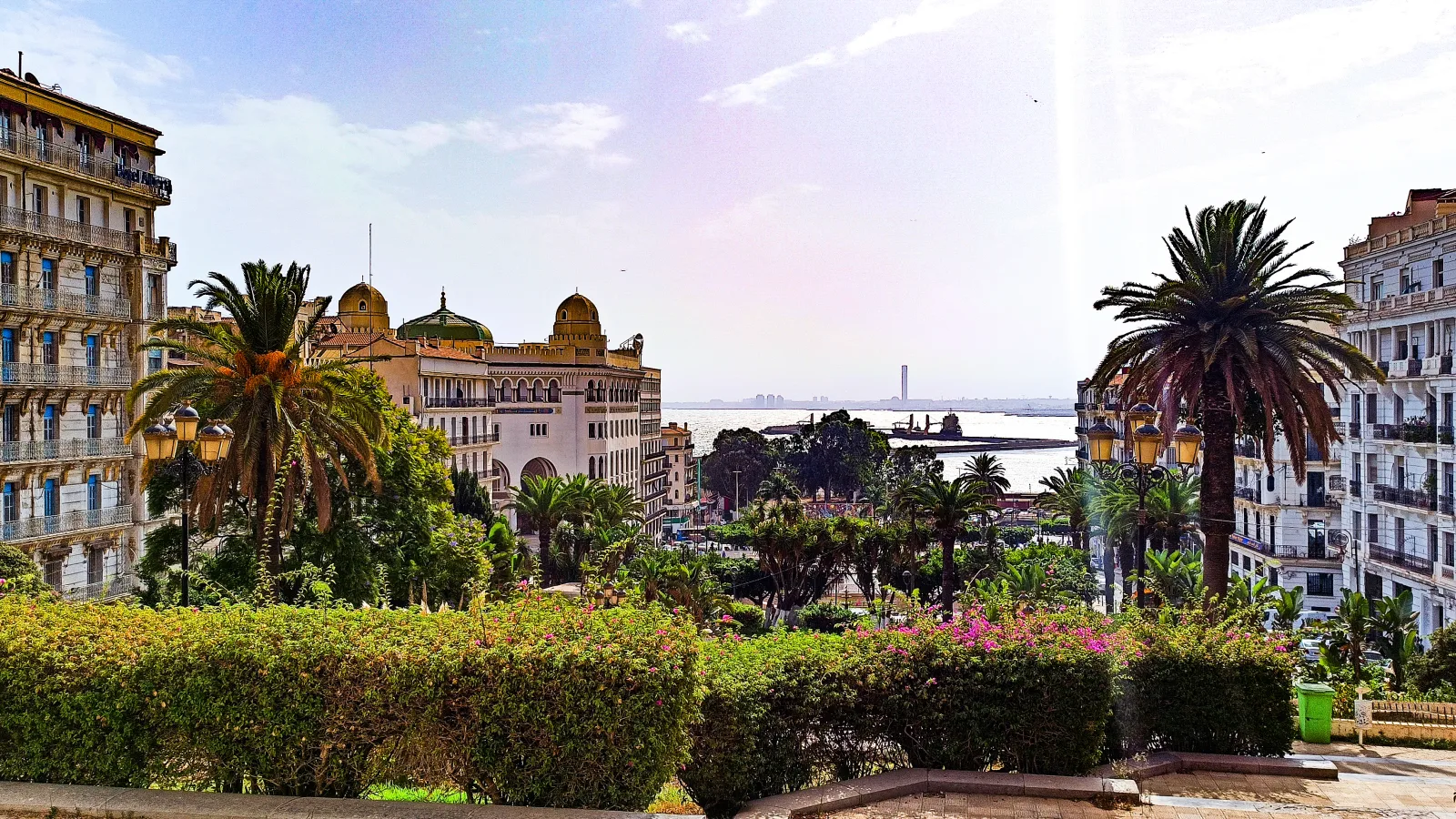
The Grande Poste is one of the easiest landmarks to build into a first walk through central Algiers. Its white façade, monumental arches and domes reward a close look, even when the interior is unavailable. Treat it as an architectural stop, not a guaranteed museum appointment.
Algiers · Visitor guide
What makes it worth visiting
- An unmistakable white neo-Moorish façade
- Monumental entrance arches and decorative details
- A convenient starting point for central Algiers
A landmark of early twentieth-century Algiers
The Grande Poste belongs to the neo-Moorish architectural movement of the early twentieth century. The tourism authority associates it with architects Voinot and Tondoire. Rather than a medieval palace, it is a public building whose design reinterprets earlier architectural forms.
Seeing it in its urban setting helps make that distinction clear. The monument sits among the everyday movement of the centre: pedestrians, traffic and metro passengers, not within a secluded archaeological site.
Take time with the exterior
Begin at a safe public viewpoint where you can see the composition of the façade, then move closer to study the arches and ornament. The domes and the contrast between broad white surfaces and intricate details are part of its appeal.
- Look at the scale and rhythm of the entrance arches.
- Compare the decorative details with the building’s overall symmetry.
- Keep entrances, stairs and metro access clear while taking photographs.
Arrive by the right metro station
The operator lists Tafourah–Grande Poste station, a useful name to save before travelling. Use the map to orient yourself towards the building and the adjoining central streets rather than relying only on the name of a taxi drop-off.
Busy road crossings and curbs deserve attention. If using a wheelchair or travelling with a pushchair, check the actual station exit and the route at street level; the presence of a metro station does not guarantee a working lift or a step-free building entrance.
Plan around the façade, not a promised interior
Current interior opening, admission and exhibition arrangements were not verified. Older descriptions mention postal services, but they should not be taken as proof that counters operate here today or that a postal museum admits walk-in visitors.
Allow 20–40 minutes for the exterior and surroundings. Add time only once an interior visit has been confirmed. This makes the stop easy to fit into a broader city-centre outing without making the rest of your day depend on a locked door.
Make this an enjoyable city walk
Choose a comfortable walking pace and leave room for a break elsewhere in the centre. Carry water in warm weather, and take your photographs from pedestrian areas rather than backing into traffic for a wider angle.
- Save the station name and a map before leaving your accommodation.
- Follow any temporary barriers or staff instructions around the building.
- Keep a flexible plan: the architectural stop is worthwhile without an interior visit.
Continue towards the old town
An onward metro journey to Place des Martyrs puts you by the lower Casbah and Ketchaoua. It is a more practical connection than squeezing distant hilltop attractions into the same short walk. Leave a separate time allowance for the old town, especially if taking a guided tour.
Sources & visitor information
Sources checked
Build your itinerary

The Casbah of Algiers: a practical guide to the old town
Explore Algiers’ UNESCO-listed Casbah with advice on local guides, steep lanes, respectful photography, meeting points and nearby monuments.
Read the guide
Ketchaoua Mosque: a respectful visit to the lower Casbah
Locate Ketchaoua Mosque by the lower Casbah, understand its history and plan a respectful exterior or permitted interior visit in Algiers.
Read the guide