


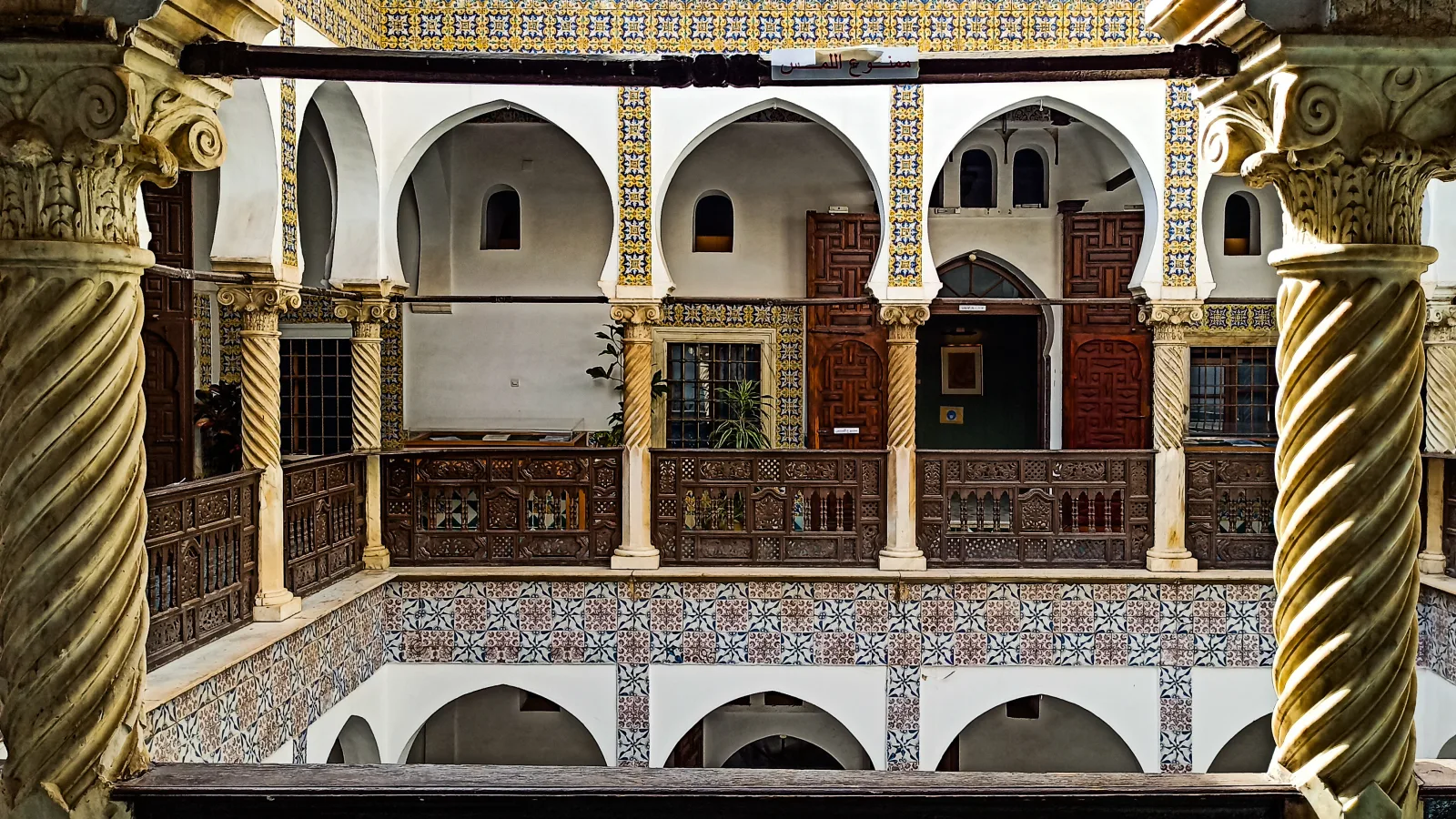
Above the Jardin d’Essai, Villa Abd-el-Tif offers a different view of Algiers’ cultural life: an Ottoman-period home that became an artists’ residence and now serves a working cultural institution. Its appeal lies in the courtyards, craftsmanship and hillside setting, but access should be confirmed before you go.
Algiers · Visitor guide
What makes it worth visiting
- An Ottoman-period villa with an open courtyard
- The history of the Abd-el-Tif artists’ residence
- Arcades, craftsmanship and terraced gardens
From a private home to a house of artists
The Algerian Agency for Cultural Outreach, AARC, describes a late-seventeenth-century villa first recorded in 1715. It took its enduring name from the Abd-el-Tif family, which acquired it in 1795. These layers of ownership are part of the history of the hillside residences around Algiers.
In 1907 it became an artists’ residence associated with the Prix Abd-el-Tif. Restoration in 2006–2008 preceded its current role as AARC’s headquarters and a venue for cultural activity. That working role is important: it is not simply an unattended monument open whenever you arrive.
What to notice if a visit is possible
AARC describes an open central patio surrounded by arcaded galleries, marble columns, carved woodwork and wall tiles. The terraced gardens are closely connected to the hillside setting above Hamma.
- Look at the transition from the courtyard to the galleries.
- Notice how shade, openings and materials shape the rooms.
- Ask which rooms and garden areas form part of the authorised visit; office or event spaces may be separate.
The last part of the journey is uphill
Jardin d’Essai metro station brings you to the neighbourhood, not to the villa’s door. The approach along Chemin Kechkar Omar is a separate uphill leg from a garden visit. Use the villa’s full name, also written Dar Abdelatif, when arranging transport.
If gradients or stairs are a concern, ask AARC about the entrance and a suitable vehicle drop-off. A close taxi approach does not establish that the internal route or terraces are step-free.
Contact AARC before making a special trip
No fixed tourist timetable or admission tariff was verified. Check with AARC whether a visit is possible, which areas are open and whether an exhibition or event affects access. A professional filming or venue-hire form is not the same as a general tourist booking.
Allow 45–75 minutes once access has been confirmed, with additional time for a programme you specifically intend to attend. If confirmation is unavailable, make the Jardin d’Essai your main outing instead of relying on entry to the villa.
Respect a working cultural venue
Follow staff directions around exhibitions and offices. Ask about photography, particularly if bringing professional equipment; do not treat access to a courtyard as permission to enter every room.
- Wear shoes suited to the uphill approach and changes of level.
- Ask about specific mobility requirements rather than a general “accessible” label.
- Keep your return flexible and arrange a clear pickup location if travelling by taxi.
A measured Hamma itinerary
The garden is the most natural companion to the villa, with time left for a break between them. The Fine Arts Museum is another possible addition only after separately checking its opening. Do not build a tightly timed afternoon around several unconfirmed interiors or an assumed cable-car connection.
Sources & visitor information
Sources checked
Build your itinerary
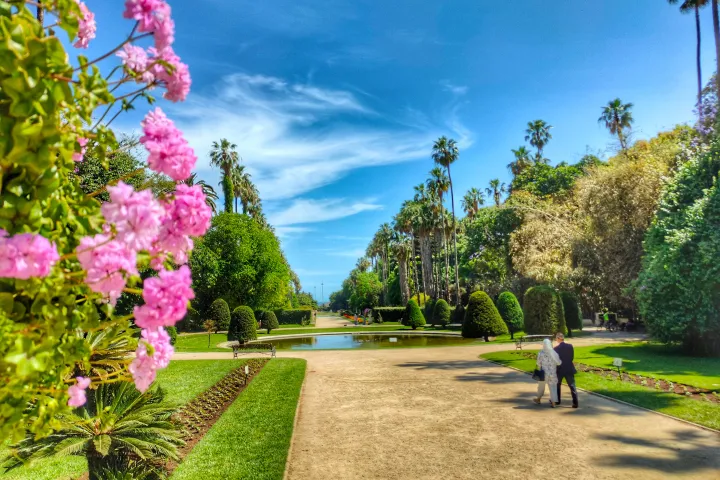
Jardin d’Essai du Hamma: planning a garden visit in Algiers
Explore the Jardin d’Essai du Hamma: botanical avenues, metro access, family pacing, opening checks and sensible nearby visits in Algiers.
Read the guide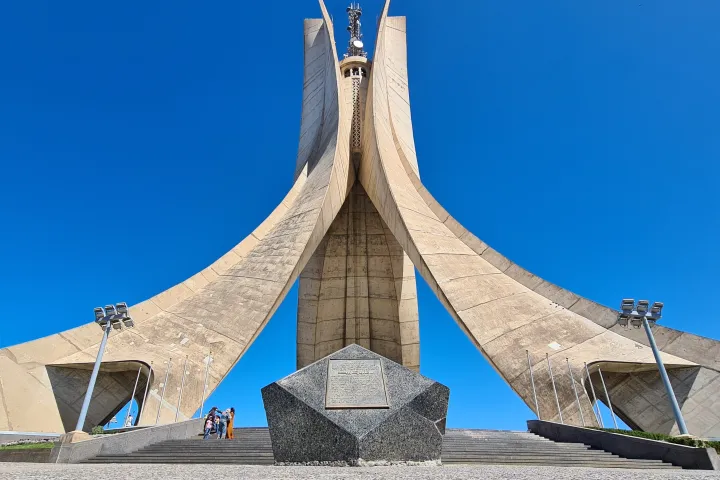
Maqam Echahid: visiting Algiers’ Martyrs’ Memorial
Plan a visit to Maqam Echahid above Hamma: the memorial’s meaning, views, transport options, museum distinction and practical advice.
Read the guide