


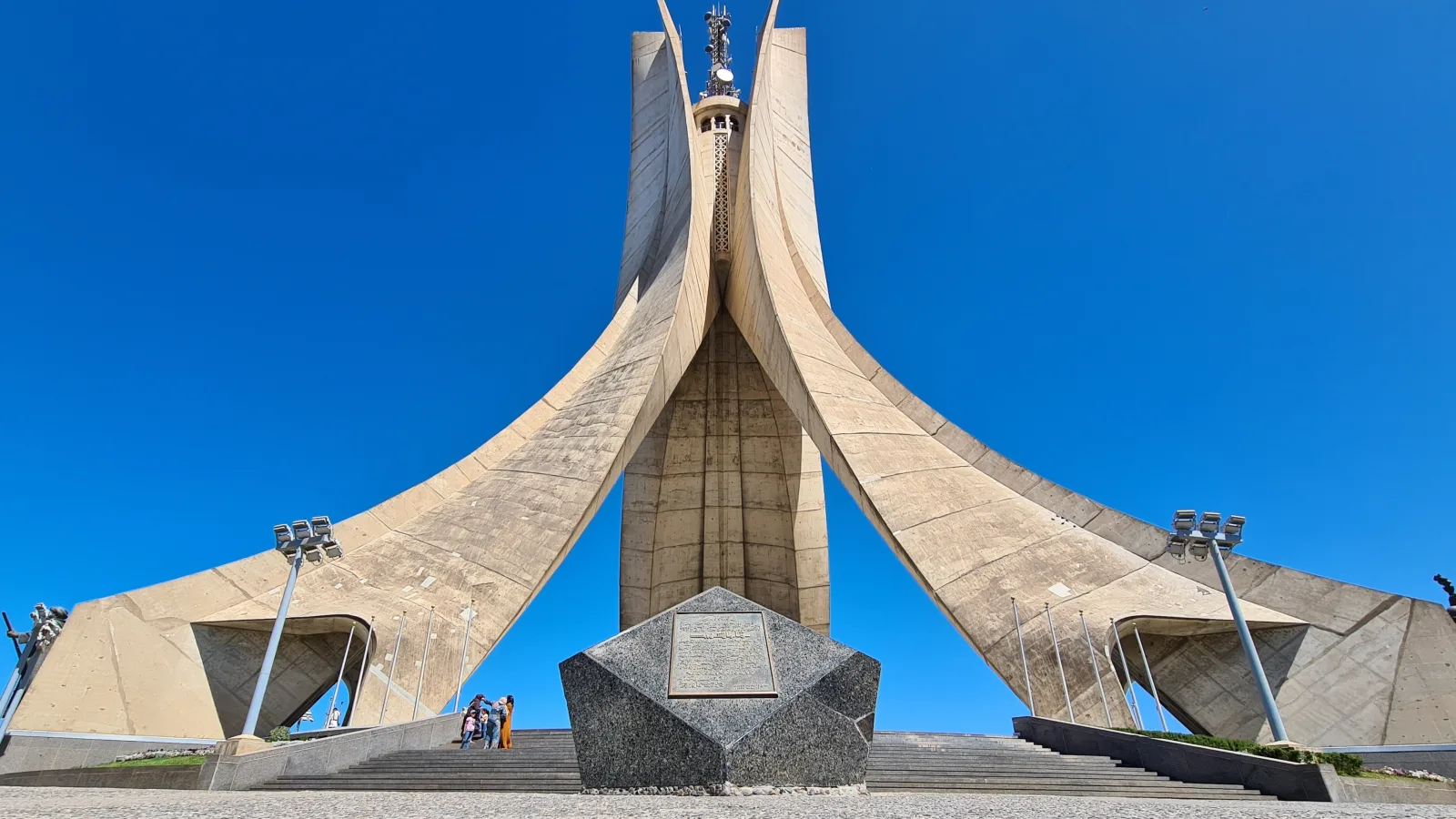
Maqam Echahid is both a defining shape on Algiers’ skyline and a national place of remembrance. Its three enormous palm-like forms rise above Hamma, with wide views across the city. Come with time to understand the memorial, not just to collect a photograph of the panorama.
Algiers · Visitor guide
What makes it worth visiting
- A national memorial erected in 1982
- Three monumental stylised palm leaves
- A different perspective on Algiers and its bay
What the memorial commemorates
The monument was erected in 1982, the twentieth anniversary of Algerian independence, in memory of those who died in the struggle for liberation. That commemorative purpose should shape the visit: it is not simply an observation platform or a sculpture park.
The three stylised concrete palm leaves meet above the central space. From the surroundings, the scale of the structure and its elevated position make a strong contrast with the lanes of the old town and the enclosed greenery of the Hamma garden.
The monument, the setting and the museum
Take time to look at the structure from permitted visitor areas before turning to the city view. Clear weather improves the panorama, but visibility is not guaranteed. Stay within public areas and respect barriers or any instructions from guards.
- Notice how the three curved forms change as you move around the site.
- Treat the outdoor memorial and the Musée national du Moudjahid as separate parts of the outing.
- Do not assume the monument can be climbed or that a lift carries visitors to a viewpoint.
Getting to the heights
Jardin d’Essai metro station is down in Hamma, not beside the monument. The metro operator describes a cable-car connection, but this is not confirmation that it is operating on your travel day. Check locally before making it essential to your plans.
A taxi to the memorial or Riadh El Feth is an alternative when avoiding the climb or an uncertain connection. Agree a clear return meeting point; the hill is not a short, level continuation of a garden walk.
Keep outdoor and indoor access separate
Allow 45–60 minutes for the outdoor memorial and its setting as an editorial planning estimate. Add time for the museum only once its current hours and admission have been checked. No reliable current museum tariff or complete visiting timetable was verified for this guide.
Commemorative events and on-site instructions may affect access. If particular levels, toilets or step-free entry are essential, ask about those exact facilities rather than relying on a general accessibility label.
A respectful visit in an exposed setting
Bring water and sun protection; a light extra layer can be useful in exposed, windy weather. Give the site space during ceremonies, keep children near you and follow any photography restrictions around guarded areas.
- Avoid standing in restricted areas for a better camera angle.
- Do not photograph security-sensitive details against instructions.
- Allow a rest and transport margin if this follows a long garden or city walk.
Make Hamma the other half of the outing
The Jardin d’Essai offers a natural change of pace before or after the memorial. Villa Abd-el-Tif is another possible stop only if its cultural operator confirms access. Choose one addition and allow for the height difference instead of trying to cover the whole hillside in a tight afternoon.
Sources & visitor information
Sources checked
- Le mémorial du Martyr - Direction du Tourisme et de l'Artisanat Alger · alger.mta.gov.dz
- Station Jardin d’Essais – Métro El Djazaïr · metro-eldjazair.dz
- Mémorial du Martyr — Wikipédia · fr.wikipedia.org
- Musée national du moudjahid d'Alger — Wikipédia · fr.wikipedia.org
- OpenStreetMap · © OpenStreetMap contributors · ODbL
Build your itinerary
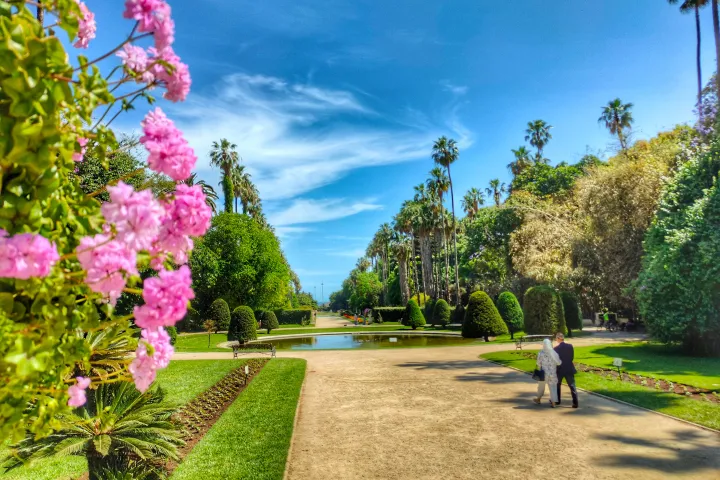
Jardin d’Essai du Hamma: planning a garden visit in Algiers
Explore the Jardin d’Essai du Hamma: botanical avenues, metro access, family pacing, opening checks and sensible nearby visits in Algiers.
Read the guide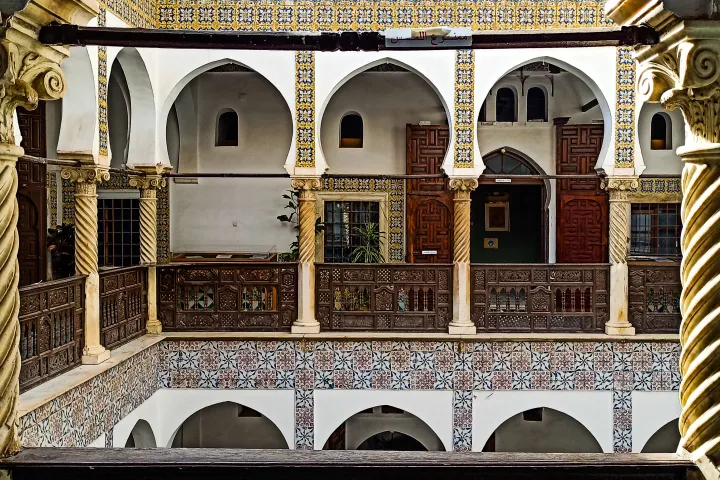
Villa Abd-el-Tif: history and practical visiting advice
Discover Villa Abd-el-Tif above Hamma: Ottoman architecture, its artists’ residence history, AARC visitor checks, hillside access and map.
Read the guide