

Agriculture has long been a pillar of Algeria's economy and a crucial sector for employment, rural livelihoods, and food security. Despite the country's vast size — the largest in Africa at approximately 2.38 million km² — less than 4% of total land area is cultivable, concentrated in the fertile northern coastal strip and the Tell Atlas region. The agricultural sector contributed roughly 12–13% of Algeria's GDP in the 2010s and early 2020s, employing a significant share of the labour force, particularly in rural areas.
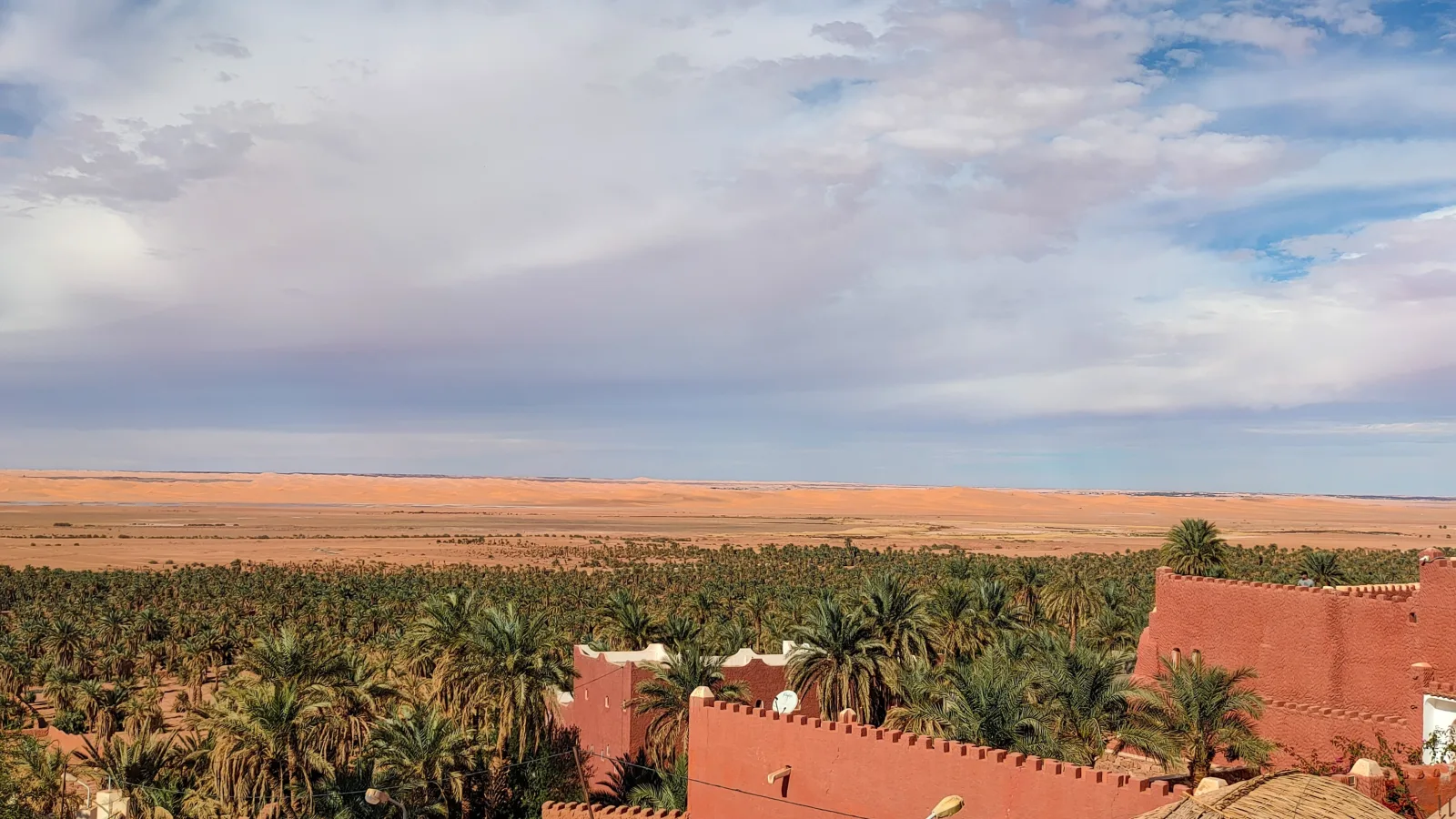
Algeria's agricultural landscape is shaped by its Mediterranean climate along the coast, semi-arid high plateaus, and the Sahara Desert covering more than 80% of the country. This geography creates sharp contrasts: fertile plains such as the Mitidja Plain south of Algiers produce abundant cereals, citrus, and vegetables, while the vast southern regions support date palm cultivation in oasis agriculture.
Historical Context
### Pre-Colonial Agriculture (Before 1830)
Before French colonisation, Algerian agriculture was largely non-industrial and sustained a population of approximately 2–3 million. Farmers cultivated wheat, barley, citrus fruits, dates, nuts, and olives using traditional methods adapted to local conditions. The agricultural system was sufficient to feed the population without significant food imports, reflecting centuries of adaptation to the Mediterranean and semi-arid environments.
### Colonial Period (1830–1962)
French colonisation transformed Algerian agriculture dramatically. Colonial authorities established some 2,200 privately operated farms, introducing European farming techniques, crop varieties, and land-use patterns. The most significant change came in the late 19th century when the phylloxera epidemic devastated French vineyards. Algeria emerged as a major wine producer, with vineyards expanding across the fertile northern plains. At its peak, wine production became a cornerstone of colonial agriculture and a major export to France and international markets.
The colonial period also saw the development of citrus groves, vineyards, and market-garden agriculture in the Mitidja Plain — a malarial swamp before French drainage and clearing projects — and the Béjaïa Plain. These areas remain among Algeria's most productive agricultural zones today.
### Post-Independence Era (1962–Present)
After independence in 1962, the colonial farms were placed under worker self-management (autogestion), with former labourers continuing operations using existing equipment and techniques. The government later implemented agrarian reforms, nationalising land and creating socialist agricultural domains (domaines agricoles socialistes). In 1987, a major policy shift dismantled these state farms and sold cultivable land to private individuals, though the state retained control over approximately one-third of all cultivable land.
Subsequent decades have seen efforts to modernise irrigation, expand cultivable area through ambitious projects in the southern regions, and reduce Algeria's heavy dependence on food imports — a persistent vulnerability given the gap between domestic production and a growing population's needs.
Key Agricultural Regions
### The Tell (Coastal Zone)
The Tell region — comprising the narrow coastal plain, the Tell Atlas mountain ranges, and intervening valleys and basins — is Algeria's agricultural heartland. It contains most of the country's arable land and population centres. Key areas include:
- **Mitidja Plain**: Extending roughly 100 km westward from Algiers, this flat, fertile plain produces citrus fruits, olives, vegetables, and cereals. It is among Algeria's most intensively farmed regions.
- **Béjaïa Plain**: Located in the east, known for olive orchards, figs, and market gardening.
- **Annaba Plain**: Eastern coastal plain producing cereals, citrus, and vegetables.
### The High Plateaus
Stretching between the Tell Atlas and the Saharan Atlas, the high plateaus are semi-arid regions with extensive cereal farming, particularly wheat and barley, and livestock grazing (sheep and goats). Rainfall variability makes production unpredictable, and drought is a recurring challenge.
### The Sahara and Oases
Algeria is the world's fourth-largest producer of dates, with extensive palm groves in oasis regions such as Biskra, El Oued, Ghardaïa, and Touat. Date cultivation is both a traditional livelihood and a growing commercial sector, with Deglet Nour dates particularly prized in international markets.
Major Crops and Production
Algeria produces a diverse range of agricultural products. Based on 2018 FAO data, the country ranks among the world's top producers for several crops:
**Cereals and Tubers:**
- Potatoes: 4.6 million tonnes (17th largest worldwide)
- Wheat: 3.9 million tonnes
- Barley: 1.9 million tonnes (18th largest)
- Oats: 118,000 tonnes
**Fruits:**
- Watermelons: 2 million tonnes (6th largest)
- Oranges: 1.1 million tonnes (14th largest)
- Dates: 1 million tonnes (4th largest, behind Egypt, Saudi Arabia, Iran)
- Olives: 860,000 tonnes (6th largest)
- Grapes: 502,000 tonnes
- Apricots: 242,000 tonnes (4th largest)
- Figs: 109,000 tonnes (4th largest)
- Tangerines: 262,000 tonnes
- Pears: 200,000 tonnes
- Peaches: 190,000 tonnes
- Plums: 111,000 tonnes
**Vegetables:**
- Onions: 1.4 million tonnes (16th largest)
- Tomatoes: 1.3 million tonnes (18th largest)
- Peppers: 651,000 tonnes
- Carrots: 431,000 tonnes
- Pumpkins: 388,000 tonnes
- Cauliflower and broccoli: 207,000 tonnes
- Garlic: 202,000 tonnes
- Cucumbers: 193,000 tonnes
- Peas: 186,000 tonnes
- Aubergines: 181,000 tonnes
- Artichokes: 124,000 tonnes (5th largest)
This production profile reflects Algeria's Mediterranean climate — strong in tree fruits (olives, dates, citrus), industrial crops (tomatoes, potatoes for processing), and cereals — while also highlighting gaps in oilseeds, sugar, and livestock feed that drive import dependence.
Livestock and Fisheries
The livestock sector is a vital component of rural livelihoods, particularly in the high plateaus and steppe regions. Sheep farming dominates, with Algeria maintaining one of the largest sheep flocks in North Africa. Goats, cattle, and poultry are also significant. The dairy sector has undergone substantial investment in recent decades, though domestic production still falls short of consumption.
Algeria's Mediterranean coastline (2,148 km) supports a modest fishing industry, with ports at Algiers, Oran, Annaba, Béjaïa, and Cherchell. Key catches include sardines, anchovies, mackerel, and tuna. The government has pursued aquaculture development to complement capture fisheries.
Food Economy and Trade
Agriculture's contribution to GDP — approximately 12–13% in the 2010s and early 2020s — understates its broader economic importance. The sector employs a disproportionately large share of the workforce, provides livelihoods for millions in rural areas, and is central to government strategies for economic diversification away from hydrocarbon dependence.
However, Algeria remains a significant net food importer. Key import categories include:
- Cereals (particularly durum wheat for couscous and bread)
- Vegetable oils (soybean, sunflower)
- Sugar
- Milk powder and dairy products
- Livestock feed grains (maize, barley)
This import dependence makes Algeria vulnerable to global commodity price fluctuations and supply chain disruptions. The government has pursued various policy responses, including:
- Irrigation expansion programmes (the National Plan for Agricultural Development and similar initiatives)
- southern agriculture development schemes (supporting cereal and fodder production in desert regions via pivot irrigation)
- import-substitution strategies (domestic wheat and feed grain production targets)
- Investment in agricultural research and extension
Government Policy and Institutions
The **Ministry of Agriculture and Rural Development** (Ministère de l'Agriculture et du Développement Rural) is the primary government body overseeing the sector. Key policy frameworks have included:
- **National Agricultural Development Plan (PNDA)**: Focused on expanding irrigated area, supporting smallholders, and improving productivity.
- **Agricultural Renewal Policy (Politique de Renouveau Agricole)**: A more recent framework emphasising private investment, value-chain development, and export promotion.
- **National Food Security Strategy**: Aims to reduce import dependence through targeted domestic production increases, strategic reserves, and international partnerships.
The **National Office of Statistics (ONS)** provides regular agricultural production and economic data, while specialised agencies support seed certification, plant protection, veterinary services, and rural development.
Challenges and Outlook
Algerian agriculture faces several structural challenges:
1. **Water scarcity**: Arid and semi-arid climates limit rain-fed agriculture; groundwater depletion in southern regions is a growing concern.
2. **Land constraints**: Cultivable land is limited to the northern strip; urbanisation and soil degradation reduce available area.
3. **Climate change**: Rising temperatures, increased drought frequency, and extreme weather events threaten production stability.
4. **Import dependence**: Heavy reliance on imported cereals and other staples exposes the food system to global price shocks.
5. **Productivity gaps**: Yields for many crops lag behind comparable Mediterranean producers due to technology gaps, fragmented holdings, and limited access to finance.
Despite these challenges, opportunities exist:
- Expansion of irrigated area through water-saving technologies (drip irrigation, pivot systems)
- Development of southern agriculture using fossil water and solar-powered irrigation
- Growth in high-value export products (dates, olive oil, early-season fruits and vegetables)
- Agro-processing and value-chain upgrading
- Organic and terroir-product certification for international markets
Further Reading
- [National Office of Statistics (ONS)](https://www.ons.dz/) — Official agricultural and economic statistics
- [Ministry of Agriculture and Rural Development](https://www.mta.gov.dz/) — Policy documents and sector data
- [FAO Algeria Country Profile](https://www.fao.org/countryprofiles/index/en/?iso3=DZA) — Production and food security data
- [World Bank Algeria Overview](https://www.worldbank.org/en/country/algeria) — Economic indicators and analysis
- [Agriculture in Algeria (Wikipedia)](https://en.wikipedia.org/wiki/Agriculture_in_Algeria) — Historical and production overview