


Algeria rewards travellers who like variety: a morning in the Casbah of Algiers, an afternoon among Roman columns, a coastal seafood dinner, and a desert night under a huge Saharan sky can all belong to the same trip. This guide helps you choose the best things to do in Algeria by travel style, season and pace, with practical context for first-time visitors.
Start with Algiers: sea views, Ottoman lanes and everyday city life
Algiers is the easiest place to begin because it combines arrival logistics with a clear introduction to the country. Spend time on the seafront, then move slowly into the older quarters where white buildings, steep lanes and balconies face the Mediterranean. The Casbah of Algiers is one of Algeria’s UNESCO-listed heritage places, but it is also a living neighbourhood, so the best visit is respectful and unhurried: go with a knowledgeable local guide when possible, avoid treating private homes as attractions, and leave time for viewpoints rather than trying to rush every alley.
Beyond the Casbah, visitors often plan time around the Jardin d’Essai du Hamma, the basilica of Notre-Dame d’Afrique, museums, bookshops, cafés and the Martyrs’ Memorial area. Algiers works best as a two- or three-day base: one day for historic neighbourhoods, one for museums and gardens, and one flexible day for markets, food and recovery after arrival.
Walk through Algeria’s Roman and ancient sites
For history-focused travellers, Algeria is one of North Africa’s most rewarding destinations. The Roman city of Tipasa sits near the Mediterranean west of Algiers, making it one of the most accessible archaeological day trips from the capital. Further inland and east, Djémila and Timgad show a different scale: streets, arches, theatres, temples and stone layouts that make ancient urban planning easy to imagine on foot.
These sites deserve more than a quick photo stop. Go early when possible, carry water and sun protection, and read a short background before arrival so the forum, theatre, baths and residential areas make sense. If you are building a route around heritage, combine one coastal site with one inland site instead of repeating the same style of visit every day.
Choose the right Sahara experience
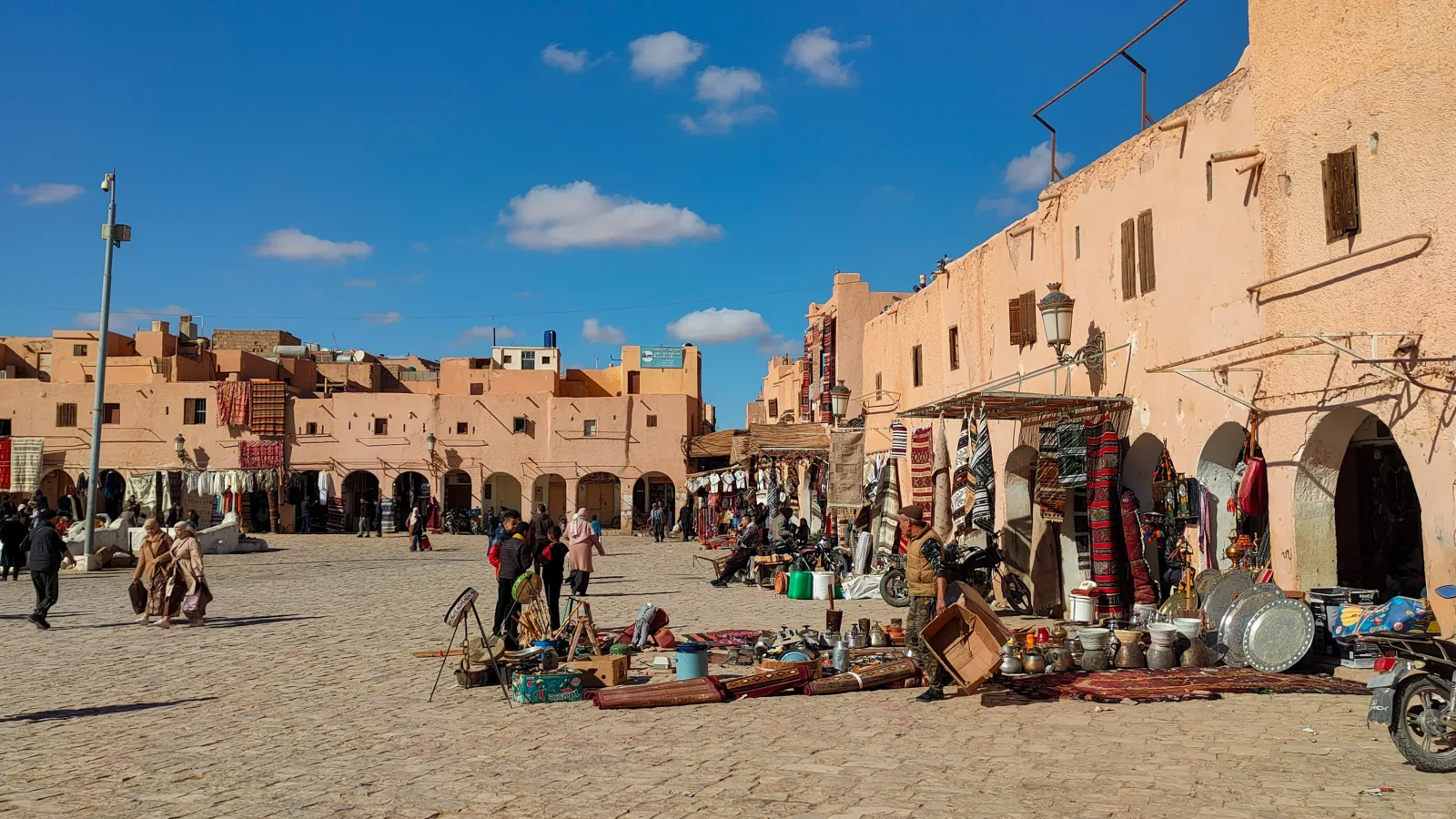
The Sahara is not one single activity. Around Ghardaïa and the M’Zab Valley, the experience is architectural, cultural and oasis-based. Around Timimoun, Béni Abbès and Taghit, travellers often look for red dunes, palm groves and slower desert towns. Around Djanet and Tassili n’Ajjer, the draw is dramatic rock landscapes, desert trekking and prehistoric rock art, usually requiring more planning, local operators and time.
The safest choice depends on your travel rhythm. If you have limited time, choose an oasis town with reliable transport and accommodation. If the Sahara is the centre of your trip, plan a dedicated desert itinerary rather than adding it as a rushed extension. Desert travel should be organised conservatively: check current local conditions, use experienced licensed operators for remote areas, respect protected landscapes and avoid leaving waste in fragile environments.
Enjoy the Mediterranean coast without rushing it
Algeria’s coastline is long and varied, with city waterfronts, fishing ports, beaches, cliffs and summer resort towns. Oran is known for its music, seafront atmosphere and western Algerian identity. Annaba, Jijel, Béjaïa and smaller coastal stops offer different combinations of beaches, forests, mountain views and local food. Summer brings the liveliest beach mood, while spring and autumn are often more comfortable for travellers who want coastal scenery without peak heat.
Coastal travel is best planned as a region, not a checklist. Pick one stretch, stay long enough to understand its pace, and mix beach time with cafés, markets, short hikes or nearby cultural stops. Families may prefer serviced beaches and towns with easier accommodation; photographers and slow travellers may prefer shoulder seasons, quieter harbours and evening light.
Explore food, markets and craft traditions
Some of the most memorable things to do in Algeria are not formal attractions. Try regional couscous styles, chorba, grilled fish on the coast, dates from oasis regions, pastries with coffee, market bread and seasonal fruit. Food is also a way to understand Algeria’s geography: Mediterranean, mountain, steppe and Sahara regions do not eat or host visitors in exactly the same way.
Markets and craft areas are useful for travellers when approached with patience. Look for ceramics, leatherwork, woven items, copper, traditional clothing details and local food products, but ask before photographing people or workshops. Bargaining customs vary by place and product; stay friendly, compare calmly and remember that the goal is a fair exchange, not a performance.
Add nature: mountains, forests, oases and viewpoints
Algeria is often introduced through desert images, but the north also has mountains, forests, national parks, agricultural plains and dramatic road scenery. The Kabylie region, the Aurès, Chréa, Djurdjura and coastal mountain areas can add hiking, viewpoints and cooler air to an itinerary. Nature travel works best when it is realistic about transport: public links may be limited, weather can change quickly, and some areas are easier with local drivers or guides.
For a balanced first trip, combine one city, one heritage site, one coastal or mountain stay, and one desert or oasis experience. That structure gives a real sense of Algeria without turning the itinerary into a long-distance endurance test.
Match activities to your travel style
- First-time cultural trip: Algiers, Tipasa, one museum day, food markets and a short coastal extension.
- History route: Algiers, Tipasa, Timgad, Djémila and Constantine, with rest days between long transfers.
- Desert-focused journey: Ghardaïa or Timimoun for an accessible oasis route, or Djanet/Tassili n’Ajjer for a specialist longer trip.
- Coast and city break: Algiers plus Oran or Béjaïa, with seafood, promenades and day trips.
- Slow travel: choose fewer regions, stay longer, learn basic greetings in Arabic or Tamazight, and leave space for invitations, transport delays and local recommendations.
Practical planning tips
Distances in Algeria are large, so the main planning mistake is trying to see the coast, several Roman sites and the deep Sahara in one short trip. Build the route around transport first, then add activities. Domestic flights can help with long distances, while trains, buses, shared taxis, private drivers and organised tours all have roles depending on the region.
Dress expectations vary by place, but modest, comfortable clothing is the safest default, especially in traditional neighbourhoods, religious sites and smaller towns. For photography, ask permission when people, homes, security-sensitive buildings or private workplaces are involved. For outdoor activities, carry water, sun protection, layers for desert nights, and enough cash for areas where card payments are not dependable.
Responsible travel in Algeria
Good travel in Algeria means slowing down enough to respect living places. Stay on marked paths at archaeological and natural sites, do not remove stones or fragments, avoid drone use unless you fully understand the rules, and choose local guides where their knowledge improves safety and cultural understanding. In the Sahara and oases, water, shade and waste matter: small careless actions become visible quickly in fragile landscapes.
If you want a simple first plan, start with Algeria destinations, then shape the pace with itinerary ideas and accommodation choices in hotels and stays. Algeria is not a country to consume in a hurry; its best experiences come when each region is given enough time to feel distinct.