


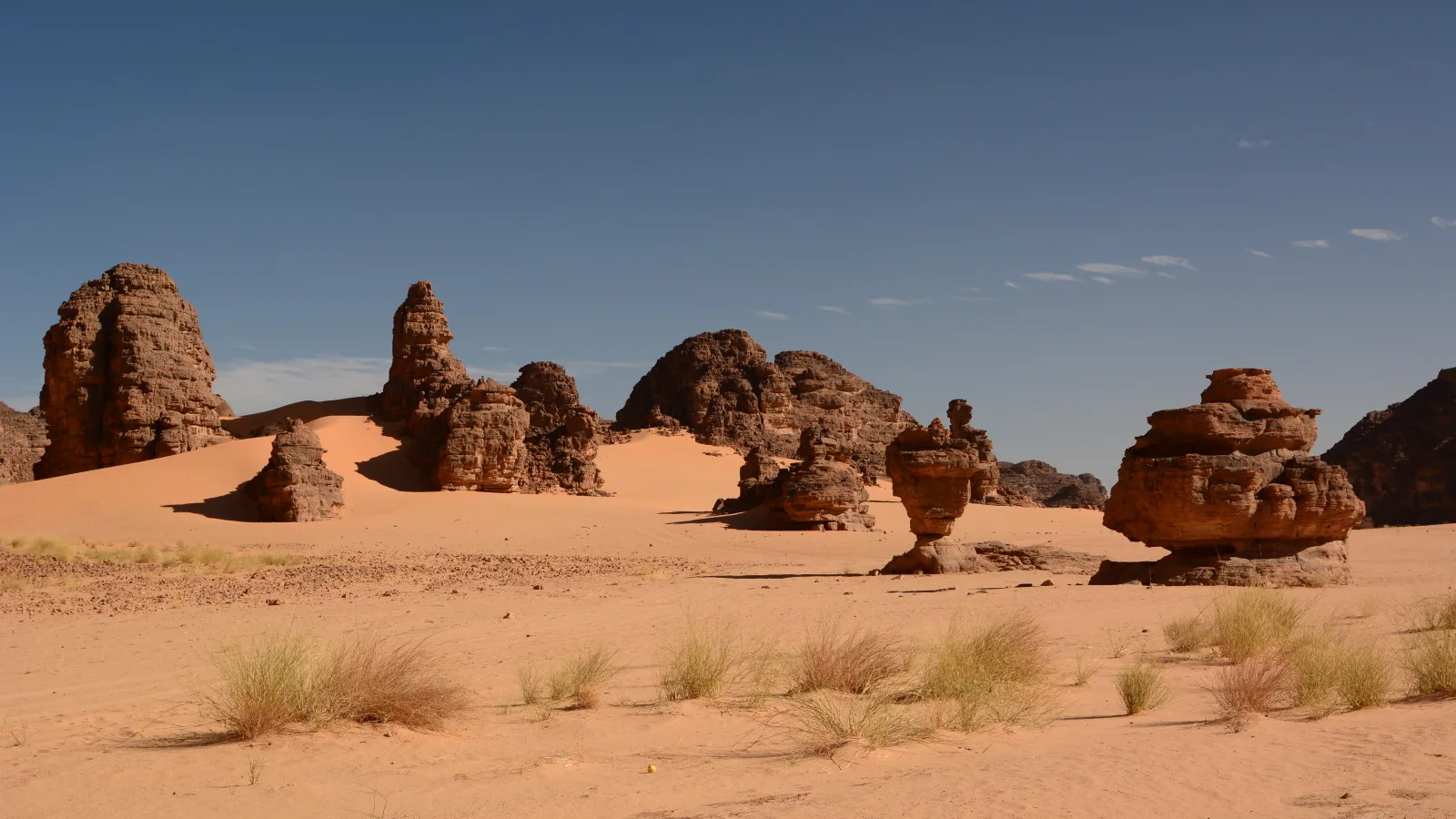
Sustainable tourism in Algeria is not a slogan. It means travelling with respect for heritage, communities, water, climate, distance and safety — and avoiding claims that make complex places sound simple.
Responsible travel in Algeria starts with humility: the country’s heritage, landscapes and communities are rich, but many places are fragile, far apart, climate-sensitive or shaped by local rules.
This guide gives travellers a practical way to think about sustainable tourism without greenwashing. It focuses on actions visitors can take and on habits that stay useful even when practical details change.
Respect heritage
Historic sites, old quarters, rock art landscapes and museums need careful behaviour, not only admiration.
Plan for climate
Heat, rainfall, drought stress and regional variation should shape timing, water use and route decisions.
Support local value
Choose guides, food, crafts and stays in ways that keep more benefit in communities where possible.
Avoid risky shortcuts
Remote, border or desert routes need current advice, insurance, local knowledge and realistic logistics.
What sustainable tourism should mean here
For Algeria, sustainable tourism should be practical before it is promotional. It is not enough to add words like “eco,” “authentic” or “green.” A responsible visitor asks harder questions: Is this route appropriate for the season? Does the visit respect local people? Does it protect heritage? Does it reduce waste? Is water use sensible? Are guides and hosts treated fairly? Are safety and access being checked from current sources?
A responsible travel guide should help travellers make better choices without pretending that every trip can be impact-free. Algeria’s scale matters. A short city stay, a museum day, a coastal weekend, a heritage route and a Sahara itinerary all have different effects and responsibilities. This page helps readers see those differences.
Heritage is a shared responsibility
UNESCO’s World Heritage framing is useful because it reminds readers that heritage places are conserved for their outstanding value, not consumed as disposable attractions. Algeria’s heritage includes archaeological cities, old urban fabric, desert landscapes and living cultural practices. UNESCO’s intangible cultural heritage work also shows that skills, foodways, music, social practices and knowledge systems matter alongside monuments.
Visitors can help by following barriers and instructions, not touching or climbing fragile remains, avoiding graffiti, refusing to remove stones or objects, and asking before photographing people or private spaces. In old quarters, religious spaces and villages, the most sustainable action may be restraint: move slowly, dress respectfully, keep noise low, and remember that people live there.
Climate-aware travel planning
The World Bank Climate Change Knowledge Portal describes Algeria’s current climatology using observed historical data and explains how temperature and precipitation patterns affect planning. For a traveller, the message is simple: season, heat, water and distance are not minor details. They shape what is comfortable, safe and respectful.
Climate-aware travel means avoiding wasteful or risky behaviour. Do not plan long exposed walks in severe heat. Carry water but do not treat water as unlimited. Use air conditioning thoughtfully. Choose realistic routes instead of forcing a destination into the wrong season. In desert and oasis regions, local guidance is essential because weather, terrain, communication and distance can change the meaning of a trip.
Communities, guides and local value
Tourism can support communities when visitors use local knowledge, eat locally, respect crafts, book appropriate accommodation and pay fairly for professional guiding. It can also create pressure when travellers bargain aggressively, photograph without consent, crowd narrow streets, leave waste or expect communities to perform culture on demand.
Responsible travel should not romanticise poverty or turn local life into scenery. It should encourage readers to learn basic etiquette, ask permission, use trusted local services, and choose experiences that are transparent about what they include. When booking a craft visit, guide, food tour or guesthouse, check current details, inclusions, local reputation and payment terms before committing.
Transport and distance
Transport is a sustainability question as well as a logistics question. Algeria’s distances mean that every itinerary has tradeoffs. A slower route with fewer stops can reduce stress, improve cultural understanding and make better use of local stays. A rushed multi-region itinerary can create more transfers, more fatigue and more superficial visits.
Readers should be encouraged to cluster activities by region. Spend time in one city instead of trying to cross the country for one photo. Combine museums, food, architecture and neighbourhood walks near the same base. If travelling to remote landscapes, use reputable operators and current advice rather than improvising. Responsible travel often looks less dramatic than promotional travel, but it is usually better for the visitor and the places visited.
Practical choices by travel situation
| Situation | Responsible choice | What to verify |
|---|---|---|
| Historic site Archaeology or old city | Stay on marked paths, follow instructions, avoid touching, climbing or removing anything. | Opening, access, ticketing, guide needs, restoration limits and photography rules. |
| City stay Museums, markets and food | Walk slowly, ask before photos, support local food and crafts without pressuring private spaces. | Neighbourhood context, transport back, museum hours and current visitor rules. |
| Nature day Coast, mountains or parks | Carry waste out, avoid disturbing habitats, respect closures and plan around weather. | Season, weather, official access, local safety advice and conservation restrictions. |
| Remote route Sahara, oasis or border-adjacent area | Use local expertise, insurance and current advice; do not self-promote risky routes. | Government travel advice, operator reliability, communications, vehicle/guide plan and emergency coverage. |
No greenwashing rule: do not call an activity sustainable just because it happens outdoors or feels traditional. Explain the behaviour, benefit and limits.
Waste, water and visitor pressure
Small choices matter most when many visitors repeat them. Carry reusable basics where practical. Avoid leaving plastic, cigarette ends or food waste. Use water carefully in hotels and guesthouses. Do not treat remote landscapes as empty spaces where anything goes. Choose fewer, better stops rather than chasing a long list of sites with little time in each.
Visitor pressure is not only about numbers. It can also mean loud behaviour in old streets, intrusive photography, careless parking, drone use without permission, or walking beyond barriers. Responsible travellers should notice these behaviours and avoid them.
Safety and responsibility belong together
Government travel advice is part of sustainable planning because a risky trip can create consequences for local communities, guides, emergency services and families, not only for the traveller. UK FCDO advice says no travel can be guaranteed safe and reminds travellers to research destinations and buy insurance appropriate to itinerary and activities. That principle should inform every remote or adventure-oriented paragraph on ALG DZ.
Sustainable tourism should never pressure readers to ignore official advice in the name of adventure. If an area is sensitive, remote, restricted or subject to changing security conditions, the responsible message is to verify first and change plans when needed.
Responsible travel checklist
- Choose fewer stops and give each place enough time.
- Check season, heat, water needs and transport before building the itinerary.
- Follow rules at heritage sites, museums, parks and religious spaces.
- Ask before photographing people, homes, workshops or private ceremonies.
- Use local guides or operators where their knowledge is needed.
- Keep waste with you until you can dispose of it properly.
- Read current travel advice before remote, border or desert travel.
- Avoid claims, routes or activities that depend on outdated information.
Plan the next step
Use this guide with ALG DZ pages on UNESCO and World Heritage, museums, national parks, beaches and coast, mountains and nature, Sahara and oasis travel, hotels and stays, transport, safety and health, money and payments, restaurants and food, and language and etiquette. Together, they help turn a responsible-travel idea into a realistic itinerary.