

Why Algeria Should Be on Your Travel Radar
Algeria is the kind of destination that catches you off guard. Most travellers know it as the largest country in Africa, but few realise how much it packs in — Roman ruins that rival anything in Italy, a stretch of Mediterranean coast that feels like the French Riviera without the crowds, and a Sahara desert that goes on for days in every direction. In 2024, more than 3.5 million visitors discovered this for themselves, making it the country's strongest tourism year on record.
What makes Algeria different is that it has not been overrun by mass tourism. You can walk through the Casbah of Algiers without jostling through tour groups. You can stand at the Tassili n'Ajjer rock formations and hear nothing but the wind. That is becoming rare in the Mediterranean world, and it will not last forever.
A Quick Snapshot of Algeria Today
Algeria is emerging from years of underinvestment in tourism infrastructure with renewed purpose. The government has set an ambitious target of 12 million visitors per year by 2030, backed by a national strategy that includes visa simplification, new hotel construction, and aggressive international promotion. In 2024 alone, 47 new hotels opened, adding nearly 4,700 beds to the national capacity. Another 2,143 tourism projects are in the pipeline, which could bring total accommodation capacity to over 255,000 beds.
The National Tourist Office has been leading a coordinated push to market Algeria as a destination, working with the UN World Tourism Organization. Travel agencies have multiplied — 571 new ones were licensed in 2024, bringing the national total to 5,570.
What Algeria Offers Travellers
The Mediterranean Coast
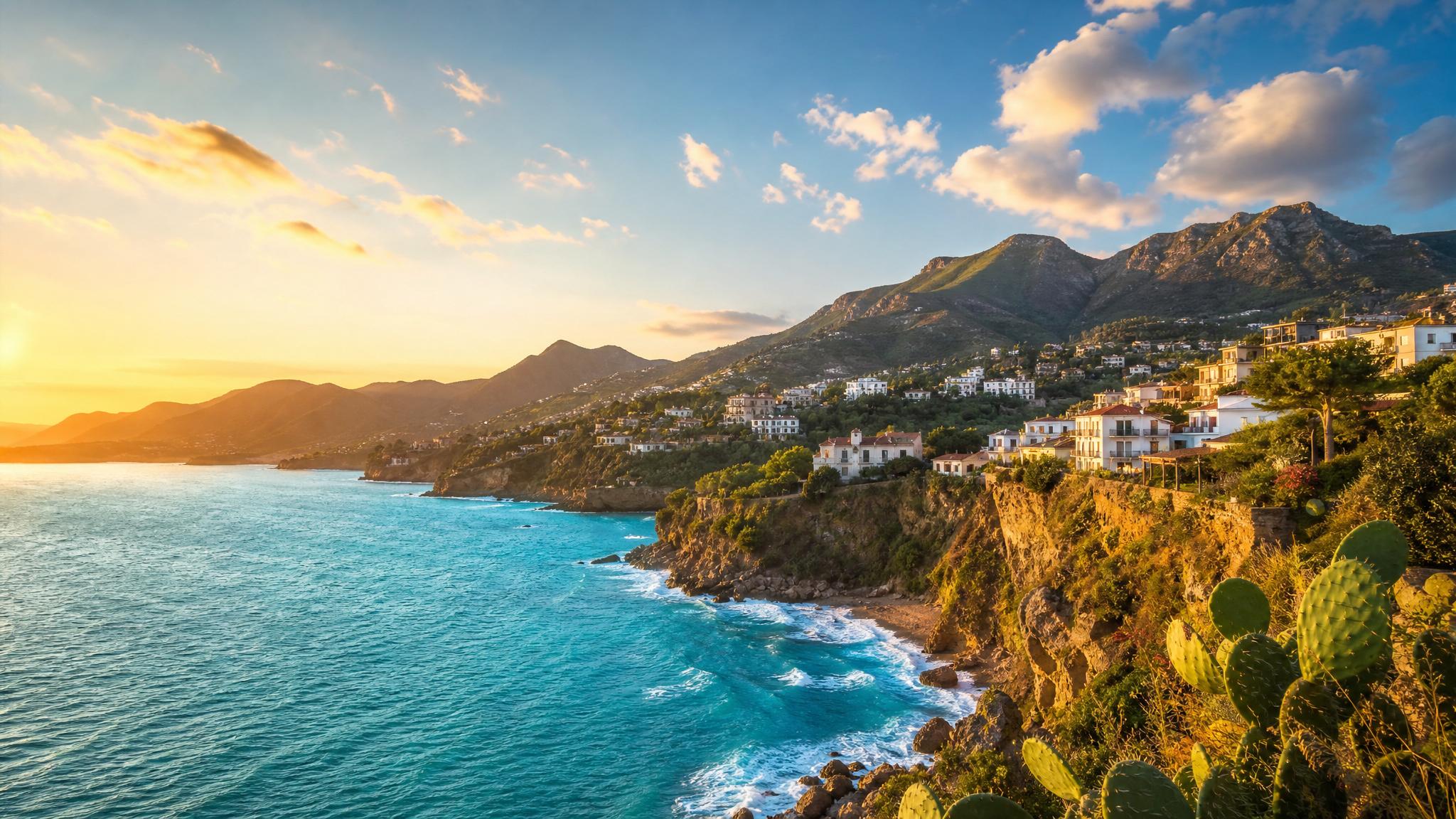
Algeria's coastline stretches more than 1,600 kilometres along the Mediterranean Sea, dotted with bays, cliffs, and whitewashed towns. Algiers, the capital, is the obvious starting point — a layered city where French colonial boulevards give way to the labyrinthine Casbah, a UNESCO World Heritage site. Beyond Algiers, the coast offers quieter alternatives. The ancient Roman ruins of Tipasa sit right on the sea, combining archaeology with stunning coastal views. The city of Oran has a more relaxed, Mediterranean vibe, with a vibrant music scene rooted in raï and a beautiful Spanish-influenced old town.
The Sahara Desert
The Sahara is the headline act. Algeria contains the most spectacular parts of the desert, including the Tassili n'Ajjer plateau, a UNESCO World Heritage site famous for prehistoric rock art dating back over 10,000 years. The landscape is otherworldly — sandstone pillars that look like skyscrapers, vast dune seas, and the volcanic massif of the Hoggar Mountains near Tamanrasset. In the first trimester of the 2024–2025 Saharan season alone, over 186,000 visitors explored the southern provinces.
Roman Heritage and Ancient Sites
Algeria holds some of the best-preserved Roman ruins in the world. Timgad, founded by Emperor Trajan around 100 AD, is often called the Pompeii of North Africa. Djemila and Tipasa are equally impressive, with stunning mountain or coastal settings. The extensive ruins at Lambaesis, and lesser-known sites scattered through Constantine and Sétif regions all reward exploration.
UNESCO World Heritage
Algeria has seven UNESCO World Heritage sites: the Casbah of Algiers, Tassili n'Ajjer, M'Zab Valley, Djémila, Tipasa, Timgad, and the Qal'a of Beni Hammad. Each is dramatically different — the M'Zab Valley is a stunning example of Ibadi Islamic urban planning, with five fortified villages unchanged since the 11th century. These sites form the backbone of Algeria's tourism identity.
Culture, Food, and Daily Life
Algerian culture blends Berber, Arab, Ottoman, and French influences. The food alone justifies a visit — couscous is the national dish, but the repertoire includes slow-cooked tagines, chorba soups, grilled méchoui, and pastries made with dates, almonds, and honey. Street food culture is strong, and the bakeries turn out baguettes that rival Paris. The national drink is sweet mint tea, served strong and poured from a height — refusing a glass is almost impossible once you are welcomed in. This warmth, the tendency to treat visitors as guests rather than customers, is Algeria's most underrated asset.
Planning Your Trip
Getting There
Algiers Houari Boumediene Airport is the main international gateway, with direct flights from major European cities. Air Algeria operates growing networks within Africa and the Middle East, and low-cost carriers including Transavia, Ryanair, and Vueling now serve Algerian cities.
Visa Requirements
Most nationalities need a visa. The process has been streamlined with e-visas for many countries. Check our Visa and Entry section for the latest details.
When to Visit
The coast and northern cities are most pleasant from March to June and September to November. The Sahara is best from October to April. Spring offers wildflowers in the mountains, while autumn provides comfortable hiking weather.
Explore More
- Destinations — Explore Algeria region by region
- Hotels and Stays — Where to sleep, from desert camps to city hotels
- Things To Do — Activities, tours, and experiences
- Itinerary Ideas — Sample routes for different trip lengths
- Sustainable Tourism — Responsible travel in Algeria
Algeria rewards the curious traveller. It is not the easiest destination — bureaucracy can be frustrating, English is not widely spoken outside hotels, and infrastructure is still catching up. But that is precisely what makes it special. The Algeria you will experience today is a country in the middle of a remarkable transformation, proud of its heritage and genuinely welcoming to those who visit. Few places offer that combination anymore.