


Algeria News Digest, June 29, 2026: Football, Exports, Investment, Public Services, Energy and Infrastructure
Algeria advances after a 3-3 draw with Austria
Sport leads the edition with a clear national marker: Algeria reached the World Cup knockout round after a 3-3 draw with Austria in Kansas City. The public wording stays on the confirmed result, the qualification and the immediate next step, with Switzerland identified as the following opponent.
The digest does not rebuild the game as a live report. It also leaves out social-media allegations, speculative tactical readings and unsupported claims around the match. The public fact is strong enough without that noise: Algeria stayed alive in the competition after a high-scoring draw.
Putting football first does not turn the whole article into a match column. It gives readers the biggest sports result while leaving room for exports, investment, public administration, youth cooperation, energy and infrastructure.
The wording also keeps the date integrity of the edition. It does not explain the source cycle to readers and does not lean on carrier names as a public crutch; the story is written as the national sports result of the day.
Ibrahim Maza tops the group-stage dribble ranking
A second sports note concerns Ibrahim Maza, reported at the top of the group-stage ranking for successful dribbles with 12 over three matches. The statistic adds an individual detail to the collective qualification story.
The wording remains careful. It is a group-stage ranking, not a final tournament award and not a claim about every later round. The digest therefore treats it as a snapshot of a strong technical performance during the first phase.
That distinction keeps the paragraph useful. Readers get a player indicator linked to Algeria’s run, while the article avoids turning a mid-tournament statistic into a settled title.
The player note is deliberately separated from the match result. That helps the digest show both the team outcome and the individual technical signal without making either paragraph carry claims it cannot support.
Annaba port loads more than 38,000 tonnes of cement for export
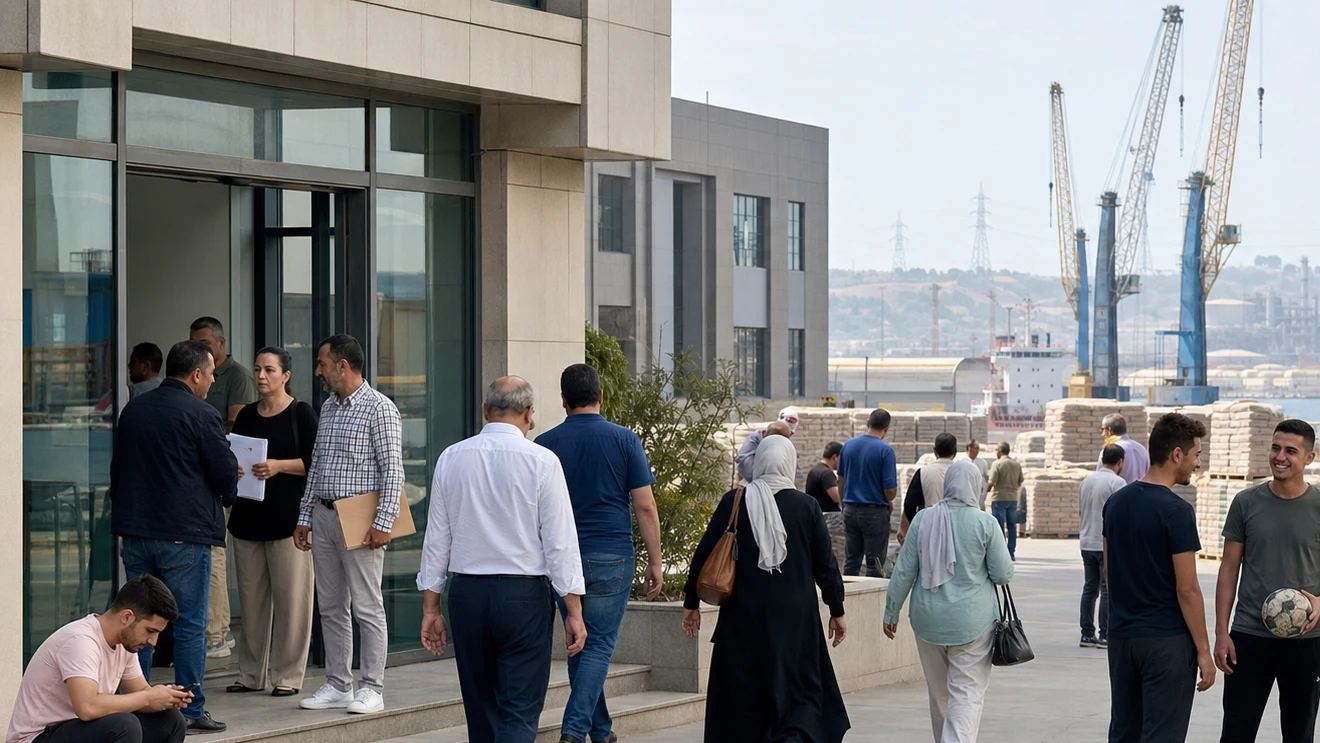
The economy has a concrete logistics item: Annaba port loaded more than 38,000 tonnes of cement for export to the United States and Spain. The volume and destinations give the story a practical shape, placing Annaba inside Algeria’s industrial-export activity.
The digest does not call the operation an all-time record. It keeps only the verified elements: cement, more than 38,000 tonnes, export destinations and the port operation.
This is the kind of detail that gives diversification a physical form. Instead of a general promise, readers see a cargo operation, vessels, foreign markets and an Algerian industrial product moving through a port.
Annaba is not treated as a slogan in this paragraph. The port, the cement cargo and the foreign destinations make the export file measurable while avoiding broader claims about market share or permanent trade growth.
AAPI presents investment reforms to an IMF mission
Investment policy appears through the AAPI presentation to an IMF mission in Algiers. The agency set out reforms linked to administrative simplification, investor support, digital services, the investment one-stop shop and clearer handling of economic land.
The article does not say the IMF approved, financed or endorsed the reforms. A presentation during consultations is not the same thing as an institutional decision by the Fund. The verified fact is the reform package that AAPI put forward and the topics discussed.
The public value lies in the administrative mechanics. Faster procedures, digital access and clearer land information can matter to investors, but the test will be whether projects move from registration to execution without friction.
The investment paragraph is kept administrative rather than celebratory. It records what was put on the table and leaves the reader with the operational question that matters: whether simplified handling becomes visible in investor files.
Mediator of the Republic follows digital complaint handling
Public administration enters the digest through the Mediator of the Republic’s coordination work on digitization and citizen complaint handling. The file concerns service modernization, follow-up mechanisms and complaint registers across public services.
The digest does not add response-time guarantees, new portals or service deadlines. It stays with the administrative direction: make citizen concerns easier to record, track and process through digital tools and better coordination.
For readers, the item is practical because it touches the relationship between citizens and the state. The quality of the change will depend on daily use, but the agenda itself is a public-service signal.
The administration item also avoids promising a user experience that has not yet been tested publicly. It is a modernization file, not a guarantee that every complaint will receive a faster answer immediately.
Medea gets a new main civil-protection intervention unit
In Medea, a new main civil-protection intervention unit was inaugurated. The item belongs to local public services and emergency response capacity, a field that can cover road accidents, fires, household incidents and ordinary rescue operations.
The article does not invent staff numbers, equipment lists, service hours or coverage zones. It records the inauguration and the general relevance of strengthening response capacity in the wilaya.
That restraint matters. The public can understand that an emergency-service facility has been added without being promised operational details that have not been verified.
The local-service angle matters because civil protection is often judged at the moment of need. A new unit can improve the map of response resources, but the article waits for official details before describing equipment or staffing.
Algerian-Tunisian youth exchange continues through June 29
Society coverage includes the visit by a Tunisian youth delegation to Algeria under an exchange programme running from June 23 to June 29. The programme included cultural and field activities and an institutional reception in Algiers.
The digest does not overstate the visit as a new permanent agreement. It presents the exchange as a people-to-people cooperation sequence between neighbours, with culture and youth mobility at its centre.
This softens an edition otherwise heavy with administration and infrastructure. It gives the day a Maghreb society item tied to young people rather than only ministries and ports.
The youth exchange is placed in a modest register. It is neither a diplomatic breakthrough nor a tourism campaign; it is a dated cooperation activity that gives young participants contact with institutions, culture and field visits.
Energy files combine domestic coordination and Niger talks
Energy appears on two tracks. Energy and Renewable Energies Minister Mourad Adjal reviewed sector coordination files, while Hydrocarbons Minister Mohamed Arkab held video talks with Niger’s petroleum minister on strengthening bilateral hydrocarbons cooperation.
The digest does not turn those meetings into signed deals, project launches or investment figures. No pipeline schedule, production capacity or financing package is added beyond the verified discussion frame.
The public point is that Algeria’s energy agenda is both domestic and regional. Internal coordination and neighbourhood cooperation can be important, but concrete outcomes require later technical and legal announcements.
Keeping the two energy items together prevents overstatement. Coordination and bilateral talks are both relevant, but neither is written as a project launch, a signed contract or a new production commitment.
Annaba phosphate-port extension remains under pressure
Infrastructure closes the edition with the Annaba phosphate-port extension project. The Public Works and Basic Infrastructure minister called for faster progress and for the mobilization of human and material resources.
The article does not publish a completion date, cost or future capacity. It keeps the verified administrative pressure on the project and connects it to industrial logistics.
Together with the cement-export item, this makes Annaba a repeated economic location in the day’s news: an active export port and a site where larger phosphate-linked logistics capacity is being pushed forward.
The closing infrastructure point ties back to logistics without adding unavailable engineering data. It signals pressure on the work pace and keeps the public record inside the confirmed ministerial message.